
Why Does My AC Keep Tripping the Breaker?
If your air conditioner trips the breaker more than once, the breaker is doing its job. This guide explains why repeated breaker trips deserve investigation, what homeowners can safely observe, and why electrical diagnosis should not be guessed.
Serving Harford County, Baltimore County, and Howard County.
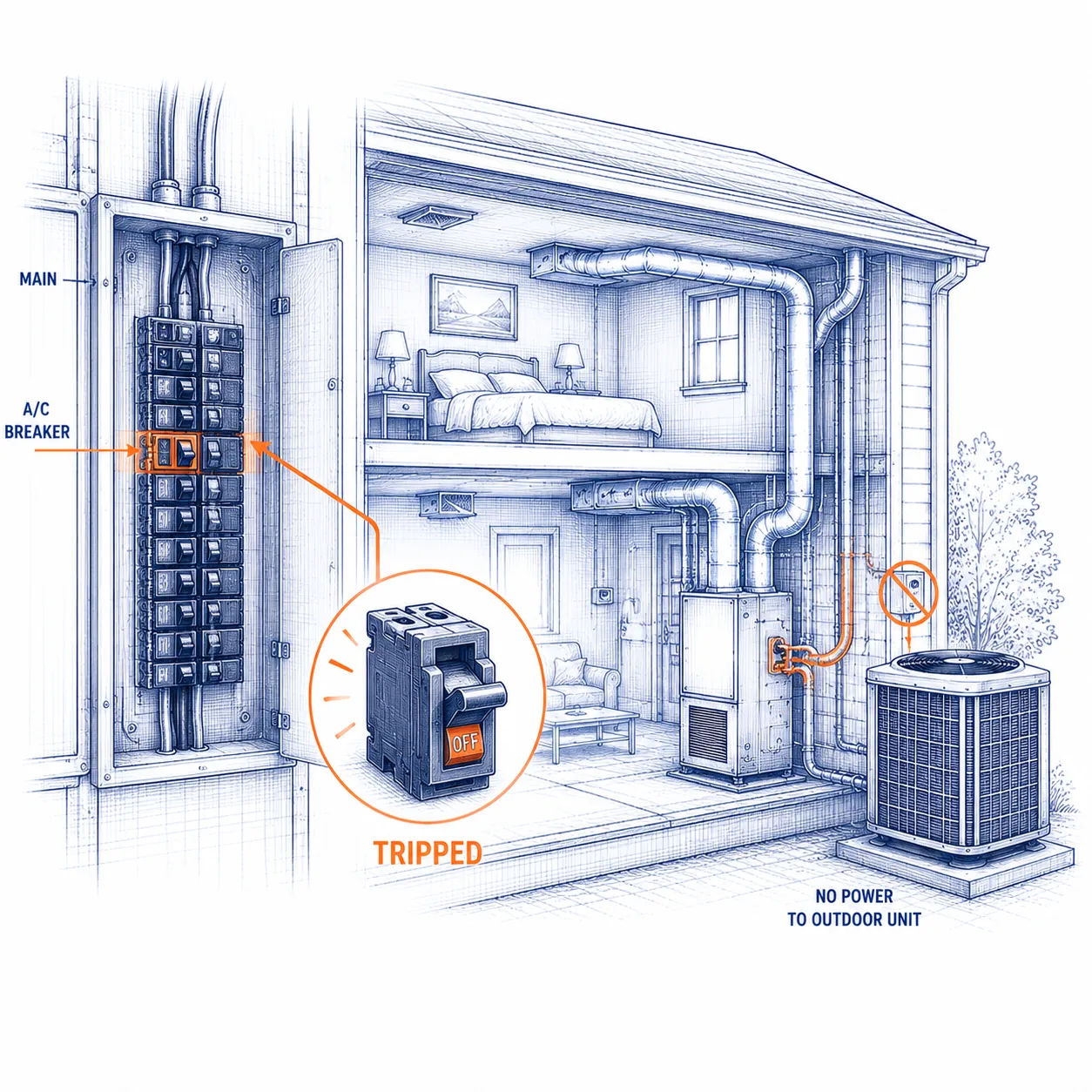
At a Glance
A breaker trips to protect the equipment, wiring, and home. One trip may happen for several reasons, but repeated trips should not be treated as a nuisance. They are a sign that something in the electrical load or equipment operation deserves attention.
The breaker is opening because the circuit reached a condition it is designed to stop.
The issue may involve motors, controls, wiring, compressor load, dirty coils, or another electrical fault.
Safe observation is useful. Repeated resets can increase risk and make diagnosis harder.
How a Breaker Protects Your System
A breaker is a protective device. When an air conditioner creates an unsafe electrical condition or the circuit sees more load than it should, the breaker interrupts power instead of allowing the system to keep running.
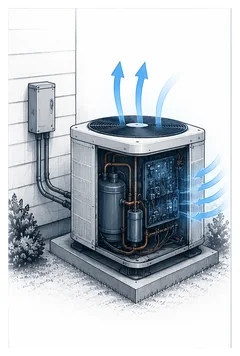
The system starts, motors run, airflow moves, and electrical load stays within the circuit limit.
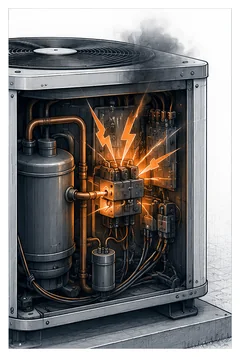
A motor, compressor, wire, control, capacitor, or load condition may cause abnormal electrical demand.
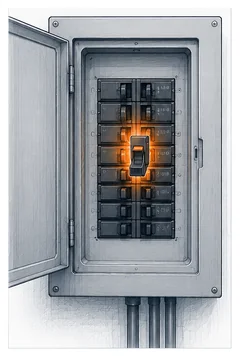
The breaker opens the circuit to protect the wiring, equipment, and home.
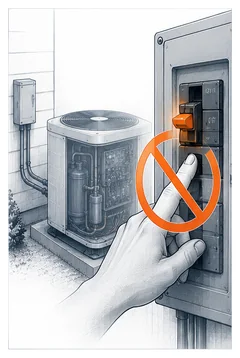
Resetting the breaker does not correct the cause of the electrical problem.
The next step is understanding why the circuit opened: electrical load, motor operation, wiring, controls, compressor behavior, coil condition, or another fault.
Quick Answer
If your AC keeps tripping the breaker, the safest assumption is that the breaker is responding to an electrical or equipment condition that needs evaluation. It could involve compressor load, fan motor problems, capacitor-related conditions, wiring issues, electrical shorts, mechanical resistance, dirty coils, high operating load, or another electrical fault.
The breaker is not the problem simply because it trips. It may be doing exactly what it was installed to do. The important question is why the circuit is exceeding safe operation or why the equipment is creating conditions that cause the breaker to open.
Do not keep resetting the breaker to see if the system will stay on. If it trips repeatedly, leave it off and schedule professional diagnosis. HVAC equipment uses high voltage, and the cause should be proven with safe electrical testing.
What can I safely check?
These checks are safe observations. They help describe the situation without turning the homeowner into the technician.
Notice whether the AC breaker is fully tripped or simply in the on position.
One isolated trip is different from a breaker that trips again after reset.
Listen for humming, buzzing, clicking, or the outdoor unit attempting to start.
Any burning smell should be treated seriously and the system should remain off.
Does it trip immediately, after a few seconds, or after running for a while?
Notice whether this has happened before or started after recent service, storms, or heavy use.
What should I avoid?
Repeated resets do not fix the cause and can increase risk.
HVAC electrical compartments contain high voltage and stored electrical energy.
The breaker is a safety device, not an inconvenience.
Capacitors, motors, compressors, controls, and wiring must be tested safely.
Why does my AC breaker keep tripping?
A breaker trips when the electrical circuit reaches a condition the breaker is designed to stop. With air conditioning equipment, that can happen because a motor is drawing too much current, the compressor is struggling to start, wiring is damaged, a control is shorted, mechanical resistance is high, or the system is operating under abnormal load.
The same visible symptom can come from different causes. A breaker that trips immediately may point in a different diagnostic direction than one that trips after the system runs for several minutes. Good diagnosis starts with the timing, then verifies the electrical and mechanical conditions that could produce that timing.
Is it safe to reset the breaker?
If a breaker trips once, some homeowners may reset it once after making sure there is no burning smell, visible damage, smoke, or obvious unsafe condition. If it trips again, stop. A breaker that trips repeatedly is giving useful safety information.
Repeated resetting can expose equipment and wiring to the same fault over and over. It can also make diagnosis harder because the system may be hot, stressed, or in a different condition by the time a technician arrives.
| Lower-Risk Observation | Stop and Schedule Service |
|---|---|
| One trip with no smell, smoke, noise, or repeated issue. | The breaker trips again after reset. |
| Breaker status is unclear and the system is off. | Burning smell, smoke, visible damage, or buzzing is present. |
| The trip happened during a storm or outage and has not repeated. | The outdoor unit hums, clicks, or tries to start before tripping. |
| You are only observing from outside the equipment. | You would need to open panels or touch wiring to continue. |
Can a dirty air filter trip a breaker?
A dirty filter does not usually trip a breaker by itself in a direct, simple way. But restricted airflow can contribute to higher operating stress. Poor airflow can affect coil temperature, runtime, motor load, and overall system operation.
That is why a dirty filter is worth noting, but it should not become the automatic answer. If a breaker trips repeatedly, the electrical condition still needs to be evaluated. The filter may be a contributing factor, a separate maintenance issue, or unrelated.
A maintenance issue can increase system stress without being the only reason the breaker tripped. Diagnosis separates contributing conditions from the actual fault.
Can a bad capacitor trip a breaker?
Capacitor-related conditions can be involved in some breaker-trip situations because motors and compressors need proper electrical support to start and run. But a tripped breaker should not be turned into a “bad capacitor” diagnosis without testing.
Several conditions can create similar symptoms: motor failure, compressor problems, wiring faults, contactor problems, control issues, mechanical binding, dirty coils, or power-supply concerns. A capacitor may be part of the diagnosis, but it should be measured rather than guessed.
Why does it trip immediately or after running for a while?
Timing matters. A breaker that trips immediately when the system tries to start may point toward a different group of possibilities than a breaker that trips after the system runs for ten or twenty minutes. Neither pattern identifies the failed part by itself.
| Trip Pattern | What It May Suggest | What Still Has To Happen |
|---|---|---|
| Trips immediately. | Short, locked rotor, failed component, wiring issue, or starting problem may be possible. | Electrical testing and isolation of the fault. |
| Trips after a few seconds. | Start/run component, compressor, fan motor, or control issue may be involved. | Measure starting and running conditions. |
| Trips after running for a while. | Heat, load, dirty coils, motor condition, or compressor operation may matter. | Evaluate operation under load. |
| Trips only during extreme heat. | High load may reveal a weak or stressed component. | Confirm electrical and mechanical performance. |
How BCR Works Diagnoses This
An experienced technician looks for the reason the breaker opened. The work starts with electrical safety, then narrows the possibilities with measurements rather than guesses.
| Safe Homeowner Observation | Technician-Only Evaluation |
|---|---|
| The breaker trips immediately. | Check for shorts, grounded components, starting faults, and abnormal current draw. |
| The outdoor unit hums but does not start. | Test starting components, motor/compressor behavior, controls, and power supply. |
| The breaker trips after running. | Evaluate running current, motor temperature, coil condition, fan operation, and load. |
| There is a burning smell or visible damage. | Leave the system off and inspect wiring, controls, terminals, and affected components safely. |
| The issue repeats after reset. | Verify the cause before restoring operation. |
Should I reset the breaker?
This decision aid is educational. It helps homeowners understand when to stop resetting and schedule service.
- Is there smoke, burning smell, buzzing, or visible damage?
Leave the system off and schedule service.
- Did the breaker trip more than once?
Stop resetting it. Repeated trips need diagnosis.
- Does the outdoor unit hum or try to start before tripping?
Leave it off and have the starting circuit and equipment tested.
- Was it one isolated trip with no other symptoms?
Observe carefully, but schedule service if it repeats or anything seems abnormal.
What should I note before calling?
Did it trip once, or did it trip again after being reset?
Immediately, after a few seconds, or after running for a while?
Does it hum, buzz, click, start, or stay silent?
Burning or electrical odors are important safety information.
Storms, outage, service work, heavy use, or new symptoms.
Warm air, no cooling, ice, water, short cycling, or high electric bill.
What should I remember?
A breaker trip is not the repair. It is the circuit protecting itself. The important question is why the breaker had to interrupt power, especially if it happens more than once.
The best next step is to observe safely, avoid repeated resets, and let the cause be verified with electrical testing. Diagnosis protects homeowners from guessing and helps separate a simple issue from a condition that could damage equipment or create an electrical hazard.
Remember This
A breaker trips to protect your home and equipment. The important question is why it tripped, not simply how to reset it.
About This Guide
This guide was written by BCR Works, a Maryland-licensed residential HVAC company with more than 25 years of field experience. Every guide is based on real-world residential HVAC diagnostic experience and follows our repair-first philosophy: symptoms are clues, and diagnosis comes before recommendation.
Our goal is to help homeowners understand how their HVAC systems work, recognize common symptoms, and know what they can safely observe before professional service is needed. These guides are educational resources and are not a substitute for an on-site diagnosis.
Need Local HVAC Help?
If your AC breaker keeps tripping in Harford County, Baltimore County, or Howard County, BCR Works can evaluate the electrical condition, equipment operation, and the reason the breaker is protecting the circuit.