
Fast, Honest Gas Furnace Repair & Services

Is your gas furnace cycling on and off, blowing lukewarm air, or raising safety concerns with strange smells and noises? BCR Works provides transparent, expert gas furnace repair, maintenance, and replacement across Baltimore, Harford, and Howard Counties.
πŸ“ On-Site Dispatch Areas: Bel Air, Towson, Ellicott City, Columbia, Fallston, Nottingham, and surrounding communities across Harford County, Baltimore County, and Howard County.

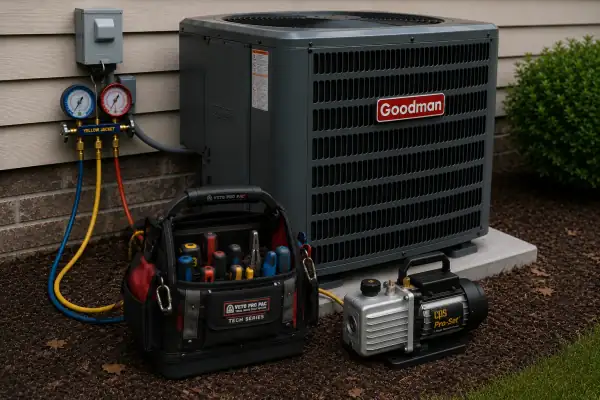
BCR Works gas furnace diagnostic tools used for transparent residential heating service in Central Maryland.

Real-world electrical, airflow, and combustion-safety diagnostic testing performed by a licensed BCR Works specialist.

Why Central Maryland Homeowners Trust BCR Works

πŸ”

Camera-Verified Diagnostics

We do not ask you to blindly trust us. We document failed furnace parts, unsafe flame behavior, wiring faults, and cabinet conditions so you can see exactly what is happening before approving work.

πŸ’°

No Hidden Pricing Surprises

We charge by the job, not by the hour. You receive a firm, straightforward, written price for approval before any furnace repair work begins.

πŸŽ“

True Gas Heating Experts

Gas furnaces rely on ignition timing, combustion airflow, safety limits, flame rectification, and gas pressure. Our technicians test the sequence instead of guessing at parts.

πŸ›‘ Sticker Shock From a Competitor’s Furnace Quote?

If another local HVAC company just left your house and dropped a massive, multi-thousand-dollar furnace repair or replacement estimate on you, do not panic. Click your diagnosed component below to review an honest breakdown of the part, real failure symptoms, and the exact questions to ask before approving the work.

1. Heat Exchanger & Structural Cells Guide →

The safety-critical repair that must be proven with real evidence.

2. Draft Inducer Fan Motor Assembly →

Second-opinion diagnosis before buying an expensive motor.

3. Electronic Hot-Surface Igniter (HSI) →

A common no-heat fault that should not become a replacement pitch.

4. Flame Rectification Sensor Probe →

Testing micro-amps before blaming the furnace brain.

5. Main Control Board & Safety Limits →

Separating true board failure from safety lockouts.

Have a Written Competitor Estimate in Hand Right Now?

Do not pay a blind premium. Text a clear photo of your technician’s written diagnosis and invoice to 443-785-4822. We will audit the mechanical line items and provide a direct second-opinion rate to fix it correctly.

πŸ› οΈ 1. Heat Exchanger & Structural Cells Guide

The heat exchanger is the metal core of your furnace, separating toxic combustion gases from the clean air blowing through your home. If these metal cells crack, warp, or split structurally, the entire system becomes an immediate safety risk.

The Honest Tech Filter: If a technician claims your heat exchanger is cracked, demand physical proof. A real structural failure should be visually verified with a specialized combustion camera or supported by combustion-analyzer evidence showing carbon monoxide behavior that matches the claim. If they cannot show a clear digital photo of the crack or a hard numerical reading, get a second opinion immediately.

Logistics: A confirmed cracked heat exchanger can definitively condemn the equipment. Replacement requires an intensive furnace teardown or a complete system upgrade conversation.

πŸ› οΈ 2. Draft Inducer Fan Motor Assembly

The draft inducer is the exhaust fan that spins up when your thermostat calls for heat. It pulls fresh oxygen into the burners and safely pushes spent combustion fumes out through the flue pipe.

The Honest Tech Filter: If the inducer motor will not start, make sure the technician tests voltage at the motor terminals and audits the pressure-switch tubing for debris, water, or blockage. Do not let a simple rubber tube clog or low-voltage wire fault become an expensive motor replacement.

Logistics: A true inducer failure requires a factory-matched replacement assembly, a high-temperature gasket seal, and a post-repair draft safety test.

πŸ› οΈ 3. Electronic Hot-Surface Igniter (HSI)

The igniter is a fragile silicon nitride or silicon carbide element that works like a high-powered lightbulb filament. It glows white-hot in front of the gas burners to light fuel cleanly.

The Honest Tech Filter: If your furnace refuses to fire but you hear the sequence trying to start, look through the viewing window. If there is no bright orange or white glow, the igniter may have a standard hairline thermal fracture. This is a routine electrical replacement, not a reason to scare you into buying a new furnace.

Logistics: This is usually an external component swap under an hour using universal or OEM-spec starting elements.

πŸ› οΈ 4. Flame Rectification Sensor Probe

The flame sensor is a metal rod that sits inside the burner flame. Once the burners ignite, this rod proves flame through a microscopic electrical current measured in micro-amps so gas is not released unlit.

The Honest Tech Filter: If your furnace lights perfectly but shuts off after 4 to 8 seconds, the flame sensor is often the cause. A competent technician tests micro-amps and cleans the rod with a light abrasive before blaming an expensive control board.

Logistics: Cleaning or replacing this probe is low labor intensity and often restores normal operation in less than 30 minutes.

πŸ› οΈ 5. Main Control Board & Safety Limits

The main circuit board regulates the blower, gas valve, ignition sequence, and safety chain of high-limit thermal switches and flame rollouts designed to stop fuel flow if the furnace overheats.

The Honest Tech Filter: If your furnace cuts out completely, it may be responding to a tripped high-limit safety switch from a clogged filter, blocked return, closed supply vent, or airflow restriction. We test continuity across the safety chain before swapping the main board.

Logistics: A true board replacement requires exact factory control matching, careful low-voltage wire mapping, and post-installation sequence validation.

πŸ”„ Time for a Fresh Start? Zero-Pressure System Replacement

If your gas furnace is over 15 to 20 years old, has a confirmed cracked heat exchanger, or keeps breaking down during peak Maryland winter drops, dumping thousands into high-ticket repairs is rarely a sound financial choice. BCR Works provides straightforward, zero-pressure system replacements. We properly size equipment for Maryland’s seasonal demands and keep the repair-versus-replace conversation grounded in heating safety, reliability, utility cost, and warranty value. Homeowners reviewing furnace safety concerns can also review NFPA’s heating safety guidance.

Schedule Replacement Estimate

πŸ”₯ Seasonal Tune-Ups That Actually Prevent Breakdowns

Most cheap furnace tune-ups are a quick wipe-down followed by a sales pitch. At BCR Works, gas furnace maintenance is a technical inspection designed to catch hidden electrical, safety, airflow, and combustion wear before it becomes a middle-of-the-night emergency.

βœ”οΈ Micro-amp testing on flame rectification circuits.
βœ”οΈ Visual and camera inspections of heat exchanger cells.
βœ”οΈ Gas manifold pressure verification with digital manometers.
βœ”οΈ Flue pipe draft safety and vent clearance review.
βœ”οΈ Blower fan running amp draw measurement.
βœ”οΈ High-limit and rollout safety switch testing.

Gas Furnace Diagnostics & FAQ

Common heating and cooling system failure patterns homeowners ask about before scheduling diagnostic service.

Why is my furnace blowing cool air?

A furnace can blow cool air because the thermostat fan is set to ON instead of AUTO, the filter is severely restricting airflow, the burners are not lighting, or the system has entered a safety lockout. A professional diagnostic checks the heat call sequence, ignition, burner operation, flame signal, high limits, blower behavior, and static pressure before replacing parts.

Why does my furnace turn on and off repeatedly?

Short-cycling happens when a furnace overheats from low airflow (often a clogged filter or blocked vents), when the flame sensor loses its signal due to carbon buildup, when a safety limit switch opens, or when the thermostat is poorly located near a heat source. Our goal is to isolate exactly why the safety circuit is cutting power, rather than simply forcing the system to restart.

What proof should I ask for if someone says my heat exchanger is cracked?

Always ask for an explicit camera image showing the physical crack or a digital combustion analysis readout proving an unacceptably high carbon monoxide crossover signature. Heat exchanger structural failures are serious safety hazards, but they must be documented with objective, verifiable evidence rather than vague, fear-based language.

How often should a gas furnace be professionally maintained?

Most gas furnaces require professional maintenance once per year, ideally before the heavy winter heating season begins. A proper safety tune-up must inspect the ignition timing, flame sensor current, burner alignment, electrical safeties, flue venting integrity, static pressure airflow, filter condition, and strict carbon monoxide output levels.

Why is there a strong rotten egg or sulfur smell near my furnace?

A rotten egg or sulfur smell indicates a dangerous natural gas leak, as utility providers add a chemical called mercaptan to make odorless gas noticeable. If you detect this odor, do not flip any light switches or attempt to restart the furnace; evacuate the home immediately, call 911 or your gas utility provider from outside, and schedule an emergency gas line pressure test.

Why is my furnace inducer motor running but the main burners won’t ignite?

If the small draft inducer fan turns on but the ignition sequence halts before the burners fire, the furnace control board is failing to clear its safety checks. This is most frequently caused by a faulty pressure switch, a blocked exhaust vent pipe, a clogged condensate drain line on high-efficiency units, or a failing hot-surface igniter that cannot reach starting temperatures.

Why is my air conditioner humming but the outdoor fan isn’t spinning?

A loud humming noise paired with a stationary fan blade almost always points to a failed dual-run capacitor that can no longer provide the electrical kick needed to start the motor. Turn your thermostat off immediately to prevent the fan motor or compressor from overheating, and book a diagnostic dispatch to have the electrical tolerances tested.

Why does my AC system keep tripping the circuit breaker?

If your cooling system instantly trips the breaker in your electrical panel, it indicates a severe electrical overload. This typically happens when a compressor is struggling to start due to mechanical wear, a short circuit in the outdoor contactor, or an electrical grounding issue. Do not continuously reset the breaker, as this can cause permanent damage to your unit’s internal windings.

Why is my air conditioner blowing air but it doesn’t feel cold?

If your vents are pushing air but the temperature is not dropping, check if the outdoor condenser unit is actually running. If the indoor blower is running but the outdoor unit is completely dead, it usually points to a bad contactor, a blown dual-run capacitor, or a tripped outdoor disconnect breaker. If both are running, you likely have a refrigerant leak or a severe airflow restriction.

What causes a loud screeching or squealing noise from an indoor HVAC unit?

A sharp screeching or squealing sound coming from your indoor unit usually indicates a failing blower motor bearing or a slipping fan belt on older configurations. In modern furnace and air handler blocks, this friction noise means the motor is close to a total electrical seize. Turn off the system immediately to prevent the motor from burning out completely.

Ready For Honest, Straightforward HVAC Service?

Whether you need an immediate furnace diagnostic, a transparent second opinion on an expensive quote, a precision tune-up, or a full heating system upgrade, BCR Works is standing by to help.

πŸ“ž 443-785-HVAC
Text Inquiries to: 443-785-4822 β€’ Serving Central Maryland Since Day One

Helpful Next Steps