
Hot-Surface Igniter Replacement: Second Opinion & Pricing Guide
Expert HVAC Solutions Across Harford, Baltimore, and Howard Counties
A homeowner-first second-opinion guide for Central Maryland families who were just told their no-heat furnace needs an igniter, control board, gas valve, or full heating system replacement.
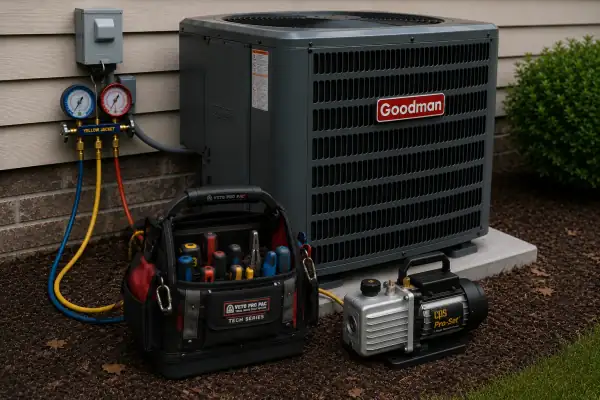
Visual glow checks, resistance testing, voltage verification, and burner sequence confirmation before replacement.
🛑 No Heat Because the Furnace Igniter Failed?
If your furnace starts its exhaust fan, clicks, then shuts down without ever producing a flame, the hot-surface igniter may be the failed part. That can feel like a major emergency in winter, but an igniter is usually a routine, affordable component repair. It should not automatically become a new-furnace sales pitch.
💬 The Plain-English Translation: What Does It Do?
Modern furnaces no longer rely on a standing pilot light. Instead, a hot-surface igniter works like a very intense lightbulb filament. When the furnace calls for heat, electricity heats the igniter until it glows bright orange or white-hot directly in front of the burners. The gas valve opens only after the ignition sequence is ready, allowing the burners to light safely and cleanly.
🔍 Symptoms Homeowners Usually Notice
When a hot-surface igniter fails, homeowners in Bel Air, Towson, Columbia, Ellicott City, Fallston, and Nottingham often notice one of these patterns:
- The no-glow startup: The inducer fan runs, you hear clicking, but no orange or white glow appears through the furnace observation window.
- The short failed sequence: The furnace tries to start several times, then locks out without producing heat.
- The winter surprise: The furnace worked normally the day before, then suddenly will not ignite because the fragile igniter filament cracked.
- The misleading bigger quote: A basic no-heat call turns into talk about control boards, gas valves, or total replacement before the igniter is even tested.
How a Professional BCR Works Technician Verifies the Failure:
We verify the furnace ignition sequence instead of guessing. A BCR Works technician visually confirms whether the igniter glows, checks for proper voltage during the ignition call, disconnects the igniter plug, and measures resistance with a multimeter. A true open-line reading proves the internal filament is broken. If voltage is missing, we keep tracing the circuit before blaming the igniter.
⚠️ How We Verify This: A Basic Igniter Fault Should Not Become a Furnace Replacement
Igniters experience extreme heat swings every time the furnace cycles. Hairline thermal fractures are normal wear, and when the circuit opens, the furnace cannot light.
Don’t wait on a risk like this — get it verified.
🔧 The “Before We Sell You Anything Bigger” Checklist
Before BCR Works recommends any larger furnace repair, we verify the ignition problem in order:
- Visual ignition check: We confirm whether the igniter glows during the startup sequence.
- Resistance testing: We test the igniter with a meter to prove whether the element is open or still intact.
- Voltage confirmation: We verify that the furnace board is sending power to the igniter before condemning the part.
- Burner sequence test: After replacement, we run the furnace through ignition, flame sensing, and blower operation to confirm stable heat.
⚖️ The Big Dilemma: Repair vs. Replace?
A hot-surface igniter is normally a repair, not a replacement decision. If the furnace is otherwise safe and the igniter failure is proven, replacement is usually fast and practical. Replacement only enters the conversation if the furnace is very old, has multiple major failures, has a compromised heat exchanger, or has repeated unsafe lockouts.
⏱️ Logistics & Expectations
- Availability: Many igniters are available as OEM or high-quality universal-spec components, but the shape, bracket, voltage, and material must match the furnace design.
- Labor Intensity: Most confirmed igniter replacements are low-intensity repairs and often take less than an hour once the correct part is on hand.
- Safety Verification: After replacement, the ignition sequence, burner flame, flame sensor response, and furnace cycling should all be verified.
What Does This Repair Typically Cost?
Typical price range for this repair: $250–$500, depending on your specific system and part accessibility. The exact number is confirmed during your diagnostic visit — we test the specific failure point before quoting, rather than guessing.
❓ Frequently Asked Questions
Q: Can a bad igniter make my furnace completely stop heating?
A: Yes. If the igniter does not heat up, the gas burners cannot light safely, so the furnace will stop the sequence and lock out.
Q: Does a failed igniter mean I need a new furnace?
A: Usually no. A hot-surface igniter is a routine component repair unless the furnace also has major safety or age-related problems.
Q: Can I tell if the igniter is bad myself?
A: You may see no orange glow through the observation window during startup, but the proper confirmation is a voltage and resistance test performed safely with the furnace powered down where required.