
Fast, Honest Air Conditioning Repair & Services
Is your air conditioning system blowing warm air, short-cycling incessantly, or driving your summer electric bills through the roof? BCR Works provides transparent, expert AC repair, maintenance, and replacement across Baltimore, Harford, and Howard Counties.
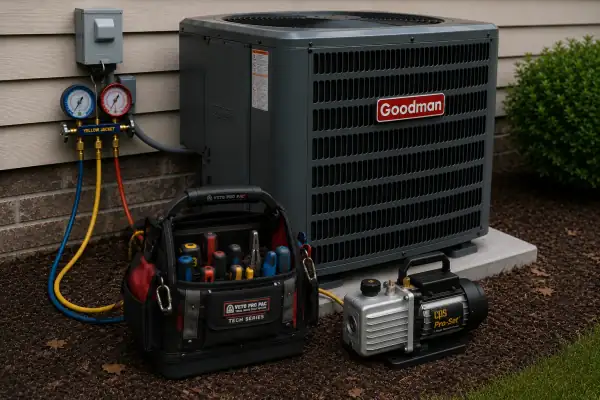
Diagnostic Visit Pricing
$99 during regular business hours (Mon–Fri, 7am–6pm) · $129 for after-hours emergency dispatch. This fee covers the technician's time, travel, and a full diagnostic evaluation of your system.
Why Central Maryland Homeowners Trust BCR Works
Accurate Diagnostics
We don't ask you to blindly trust us. We show you the exact voltage, amperage, and pressure data so you see precisely what failed before we make a repair recommendation.
No Hidden Pricing Surprises
We charge by the job, not by the hour. You receive a firm, straightforward, written price for approval before any repair work begins.
True Mechanical Repair Experts
Our licensed technicians focus on root-cause troubleshooting. We look at airflow, electrical tolerances, and thermodynamic loops instead of reading textbook sales scripts.
🛑 Sticker Shock From a Competitor's AC Repair Quote?
If another local HVAC company just left your house and dropped a massive, multi-thousand-dollar repair estimate on you, don't panic. Click your diagnosed component below to explore an honest, transparent breakdown of the part, real failure symptoms, and the exact questions to ask to verify if your quote is fair.
Not sure whether the proposed repair is worth making? Use the HVAC Repair vs. Replacement Calculator to organize the evidence before approving major AC work.
1. Compressor Replacement Guide ↓
The ultimate high-ticket repair versus replace decision when the outdoor unit cannot pump refrigerant.2. Capacitor & Contactor Repair ↓
Common electrical failures that can look like a dead compressor if nobody tests them properly.3. Frozen Evaporator Coil ↓
Airflow, TXV, and refrigerant-side problems that must be separated before anyone adds refrigerant.4. Condenser Fan Motor ↓
Outdoor fan failures, voltage checks, and heat-rejection problems that raise system pressure fast.5. Drain Lines & Float Switches ↓
Water safety shutdowns that can mimic larger control or compressor failures during humid weather.6. Refrigerant Leak Repair ↓
Leak confirmation, pressure testing, evacuation, and charge procedures before refill decisions.Have a Written Competitor Estimate in Hand Right Now?
Request a professional diagnosis from BCR Works before approving the repair or replacement. We will review the concern, verify the mechanical findings, and explain the practical next step.
Request DiagnosisSummer sales traps are not diagnostics.
Generic HVAC operations often turn minor heatwaves into high-pressure replacement opportunities. Some companies pay technicians commissions or performance incentives to condemn aging systems quickly, even when the real failure is a small electrical component, a clogged drain, or an airflow restriction.
A failed $200 capacitor can stop an outdoor condenser instantly. A blocked PVC drain line can trip a float switch and shut the system down to prevent water damage. Dishonest sales-techs can weaponize both faults into a $10,000 system replacement scare when the honest repair path starts with live component testing.
BCR Works backs every diagnostic finding with live component data so you know exactly what failed. We show voltage, amperage, microfarad readings, pressure behavior, drain safety status, airflow evidence, coil condition, and the mechanical sequence before recommending repair, replacement, or further testing.
What we verify before recommending major AC work
- Capacitor microfarads and contactor condition
- Compressor and fan motor electrical behavior
- Airflow, filter, blower, and coil condition
- Drain safety switch and condensate line status
- Pressure behavior, superheat, and refrigerant-side evidence
Flat component guides for real AC failures.
These crawlable AC repair targets organize the air conditioning hub around the exact components and failure symptoms homeowners encounter during Central Maryland cooling season.
Understanding Your Air Conditioner's Common Failure Points
Central air conditioning relies on several systems working together — electrical components that start the equipment, refrigerant that carries heat out of your home, and airflow that moves conditioned air where it needs to go. Most AC service calls in Central Maryland trace back to one of six areas: the compressor, the capacitor and contactor, the evaporator coil, the condenser fan motor, the condensate drain, or the refrigerant circuit itself.
A surprising number of these failures get lumped together and treated as one expensive problem when they're not — a $30 capacitor and a failed compressor can produce a similar-sounding hum, but they cost very differently to fix. That's why BCR Works tests the specific component before recommending work on it, and why we've written a full diagnostic breakdown for each of the six areas above. If you've already gotten a quote from another company, those guides will help you understand exactly what should have been tested before that number was written down.
Central Maryland cooling repairs with county-level focus.
BCR Works dispatches residential air conditioning diagnostics across Harford County, including Bel Air, Fallston, and Forest Hill. Our mechanics focus on the technical evidence behind the no-cool call instead of steering every summer breakdown toward replacement.
We also serve Baltimore County communities such as Towson, Nottingham, and Perry Hall, plus Howard County service areas including Ellicott City and Columbia. Whether the fault is electrical, airflow-related, refrigerant-side, drainage-related, or compressor-driven, the diagnostic process stays transparent.
Maryland Service Areas
Primary air conditioning dispatch routes and county focus areas.
Questions Homeowners Ask About Air Conditioning
Understanding Cooling Problems
Why is my air conditioner running but not cooling?
An air conditioner that runs without cooling is doing part of its job, but not moving enough heat out of the home. Common causes include restricted airflow, a dirty indoor or outdoor coil, a weak electrical component, thermostat problems, or a refrigeration issue. Low refrigerant is possible, but it is not the only explanation and it should not be guessed at. A technician should look at airflow first, confirm the outdoor unit is operating, check temperature performance, and review the electrical and refrigerant-related signs together. The goal is to identify why the system lost capacity before recommending a repair. Adding parts or refrigerant without diagnosis can miss the real cause and may leave the homeowner with the same comfort problem.
Why won't my house reach the thermostat setting?
When the house will not reach the thermostat setting, the system may be undersized, dirty, low on capacity, restricted by airflow, or fighting heat gain from the attic, windows, ductwork, or insulation. During extreme weather, even a healthy system may run longer, but it should still make steady progress toward the set point. If the temperature stalls, rises during the afternoon, or only certain rooms struggle, the diagnosis should include the equipment and the home. BCR Works looks at airflow, coil condition, outdoor unit operation, thermostat location, and system performance before assuming replacement is needed. Sometimes the answer is a repair or maintenance issue. Other times the equipment is aging or the home has comfort limits that need a broader conversation.
Why is my home still humid when the AC is running?
Air conditioning removes moisture as warm indoor air passes across the cold indoor coil. If airflow is too high or too low, the coil is dirty, the system is oversized, the refrigerant charge is off, or the system runs in short cycles, humidity removal can suffer. Maryland humidity makes this more noticeable because the home may feel sticky even when the thermostat number looks acceptable. A good diagnostic looks at more than whether cold air comes out of the vents. It considers run time, coil condition, condensate drainage, airflow, temperature change, and whether the system is operating long enough to remove moisture. The right fix depends on the cause. It may be maintenance, airflow correction, a repair, or in some cases a replacement discussion.
Why does my air conditioner run for long periods?
Long run times are not automatically a problem. On very hot or humid Central Maryland days, an air conditioner may run for extended periods to hold temperature and remove moisture. The concern is whether the system is maintaining comfort, producing normal temperature change, and cycling reasonably when outdoor conditions ease. If the AC runs constantly but the home stays warm, something is limiting performance. Common issues include dirty coils, weak airflow, low refrigerant charge, electrical problems, duct leakage, poor insulation, or an aging system that has lost capacity. A technician should compare system operation with the weather and the home conditions. The goal is to separate normal heavy-load operation from a system that is working hard because something is wrong.
Professional Diagnosis
What is checked during an air conditioning diagnostic?
An air conditioning diagnostic starts with the symptom the homeowner noticed, then works through the system in a practical order. The technician may check thermostat settings, filter condition, indoor airflow, blower operation, indoor and outdoor coil condition, condensate drainage, electrical components, outdoor fan and compressor operation, and refrigeration-related performance. Temperature measurements help show whether the system is moving heat properly. Electrical readings help identify weak capacitors, failing contactors, control problems, or motors under stress. The technician should also listen for unusual sounds and look for signs of water, ice, overheating, or poor maintenance. The purpose is not to overwhelm the homeowner with numbers. It is to explain what is limiting cooling and whether repair, maintenance, or replacement guidance makes sense.
Why is airflow important to cooling performance?
Airflow is one of the main reasons an air conditioner can look like it is running while still failing to cool well. The system needs enough indoor air moving across the coil to absorb heat and manage moisture. A dirty filter, blocked return, weak blower, dirty coil, closed vents, duct restrictions, or poor installation can reduce airflow. Low airflow can cause poor comfort, coil freezing, longer run times, high energy use, and stress on equipment. Too much or poorly balanced airflow can also affect humidity removal and room comfort. Because airflow problems can imitate refrigerant problems, it should be checked before jumping to conclusions. Repair-first diagnosis means confirming how the system is breathing before recommending major work.
Why isn't refrigerant simply added when cooling drops?
Refrigerant is not a fuel that gets used up during normal operation. If a system is low, there is usually a leak or another condition that needs to be understood. Simply adding refrigerant may temporarily improve cooling, but it does not explain where the refrigerant went or whether the system is otherwise operating correctly. Cooling loss can also come from airflow restriction, dirty coils, electrical problems, thermostat issues, or a compressor concern. A professional should review system performance, look for signs of leakage, and explain whether leak repair, further testing, or replacement discussion makes sense. Adding refrigerant without diagnosis can waste money and may leave the system unreliable. The better approach is to verify the cause before recommending the next step.
How do you determine whether an air conditioner should be repaired or replaced?
Repair versus replacement should be based on evidence, not pressure. A repair may make sense when the system is newer or middle-aged, the failure is isolated, the equipment has been reasonably maintained, and comfort was good before the problem started. Replacement deserves discussion when the system is older, uses outdated refrigerant, has a major component failure, needs repeated repairs, struggles with comfort or humidity, or has repair costs that no longer fit the remaining life of the equipment. BCR Works looks at age, condition, repair history, installation quality, and how the home feels during peak weather. The homeowner should understand both paths clearly before deciding. The first step is still diagnosis, because a repairable system should not be treated like a sales opportunity.
Central Maryland Cooling
How does Maryland humidity affect air conditioning?
Maryland humidity makes air conditioning performance about more than temperature. A home can read 74 degrees and still feel uncomfortable if the air is damp. The AC has to remove both heat and moisture, and that depends on run time, airflow, coil temperature, equipment condition, and drainage. Dirty coils, short cycling, restricted airflow, or oversized equipment can reduce moisture removal. Humidity also increases condensate production, so drain issues become more common during summer. In Harford County, Baltimore County, Howard County, and nearby areas, summer comfort often depends on whether the system can manage sticky air for long stretches. Maintenance and diagnosis should consider humidity because it affects comfort, energy use, and how hard the system has to work.
How often should an air conditioner be professionally maintained?
Most residential air conditioners should be professionally maintained once a year, ideally before heavy cooling season. Spring maintenance gives the technician a chance to check the system before Maryland heat and humidity put it under daily load. A maintenance visit may include checking filters, airflow, electrical components, outdoor coil condition, condensate drainage, thermostat operation, temperature performance, and signs of wear. Maintenance does not guarantee that nothing will fail, but it can reduce avoidable breakdowns and provide useful history about the system. It also gives the homeowner time to consider small repairs before peak summer demand fills schedules. The best maintenance rhythm may vary with pets, filter type, system age, outdoor debris, and how heavily the equipment runs.
Can extremely hot weather make a healthy AC struggle?
Yes, extreme heat can make even a healthy air conditioner run longer and recover more slowly. Residential systems are designed around expected outdoor conditions, not unlimited heat. During a severe Maryland heat wave, the system may run almost continuously, especially in homes with attic heat gain, older windows, duct leakage, weak insulation, or high indoor humidity. That does not automatically mean the equipment is failing. The important question is whether the system is maintaining a reasonable indoor temperature, removing moisture, and recovering when outdoor temperatures drop. If the thermostat falls farther behind, airflow feels weak, ice appears, or the outdoor unit behaves abnormally, diagnosis is appropriate. Weather matters, but it should not be used to dismiss a real performance problem.
How long should a residential air conditioner last?
Many residential air conditioners last around 12 to 15 years, and some last longer with good installation, maintenance, and operating conditions. Lifespan depends on more than the brand name. Airflow, refrigerant charge, coil cleanliness, electrical health, installation quality, storm exposure, maintenance history, and how hard the system runs all matter. In humid Central Maryland summers, equipment that is neglected or poorly installed may show problems sooner. Age alone does not decide whether to replace a system. A 10-year-old unit with a minor repair may be worth fixing, while an older system with repeated failures and poor comfort may deserve replacement planning. The best recommendation considers age, condition, repair cost, and how well the home is being cooled.
Need Air Conditioning Repair or a Clear Diagnosis?
Schedule AC service with BCR Works before Maryland summer demand makes small cooling problems harder to manage.