
Why Is My AC Freezing Up?
Ice on an air conditioner can be confusing because cooling equipment is supposed to be cold. This guide explains what AC ice usually means, what you can safely check, and why the cause should be diagnosed before repairs are recommended.
Serving Harford County, Baltimore County, and Howard County.
At a Glance
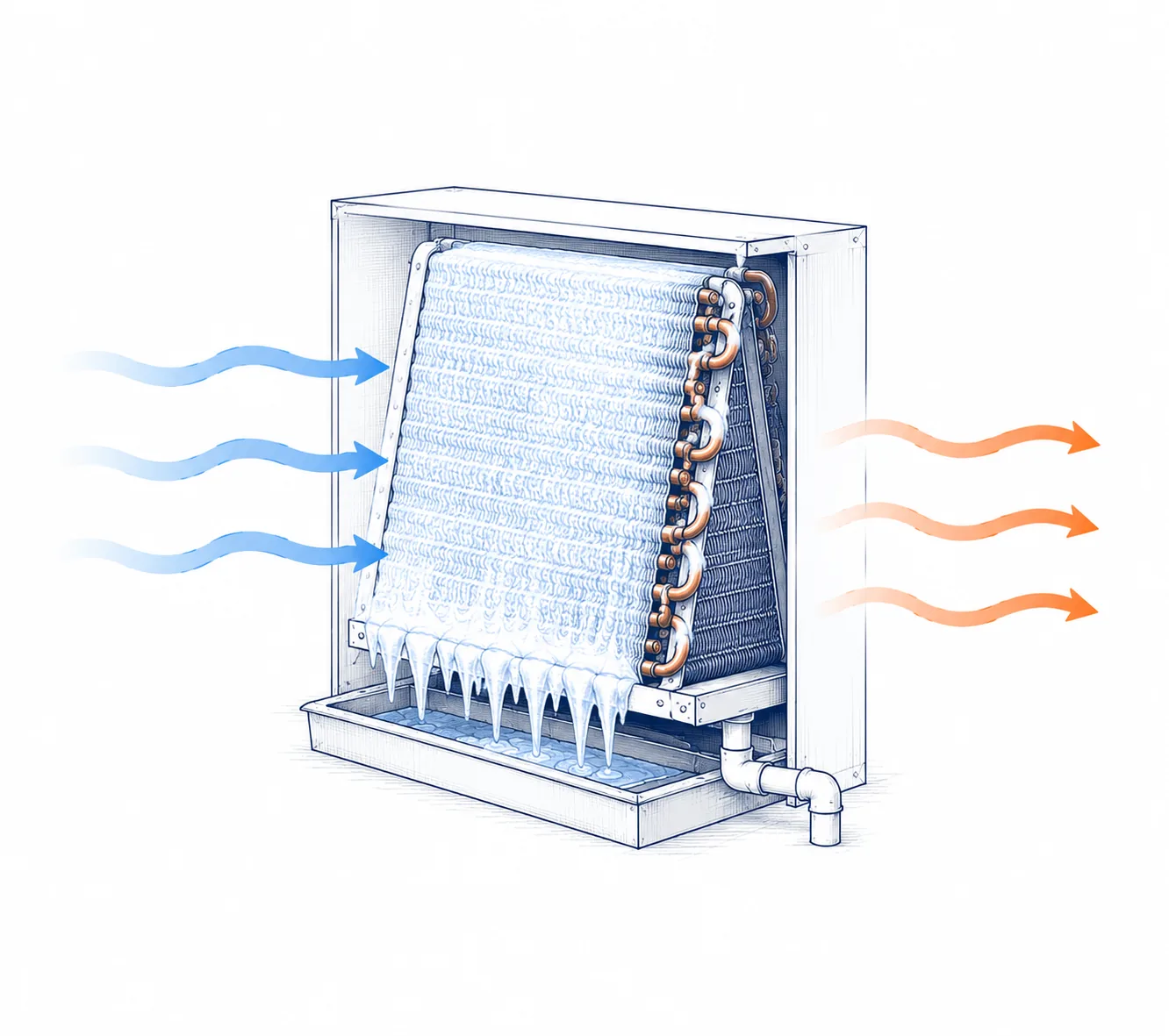
A frozen air conditioner usually means the indoor evaporator coil has become too cold for normal operation. Moisture from the home freezes on the coil or refrigerant line instead of draining away as condensation.
The system may still run, but normal cooling is interrupted.
Airflow, coil condition, blower operation, controls, or refrigerant-side conditions may be involved.
The system often needs to thaw before accurate testing is possible.
How Your AC Freezes Up
A frozen air conditioner is usually the result of a heat-transfer problem. Moisture that should drain away as condensation freezes because the indoor coil has become too cold for normal operation.
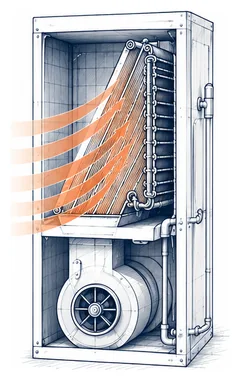
The blower should move enough warm air across the indoor evaporator coil.
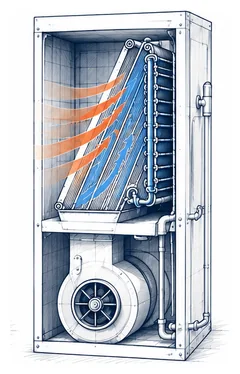
Heat from the home moves into the refrigerant circuit so cooler air can return indoors.
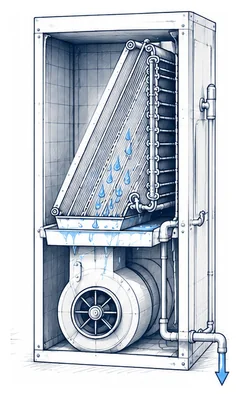
Humidity condenses on the coil and should leave through the condensate drain.
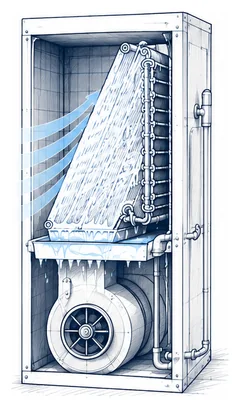
If the coil gets too cold, moisture can freeze instead of draining away.
The job is to find what changed: airflow, coil condition, blower operation, controls, refrigerant-side behavior, or a combination of conditions.
Quick Answer
If your AC is freezing up, the system is not transferring heat normally. Common categories include restricted airflow, a dirty air filter, a dirty evaporator coil, blower problems, control issues, or refrigerant-related conditions. The ice itself does not tell you which cause applies.
The safest homeowner response is to turn cooling OFF if ice is visible. Setting the fan to ON may help air move across the coil while it thaws, but it does not fix the reason the system froze. Depending on conditions, thawing may take several hours and sometimes overnight.
A frozen system should not be diagnosed while the coil is still covered in ice. Ice can hide airflow conditions, coil condition, temperature readings, and refrigerant-side measurements. A repair-first diagnosis begins after the system can be evaluated accurately.
What can I safely check?
These are safe observations. They are not repairs, and they are not enough to diagnose the system by themselves.
Look for ice on the larger copper refrigerant line, indoor coil area, or around the indoor equipment.
Look for a filter that is heavily dirty, collapsed, wet, or the wrong size.
Notice whether airflow feels weak, normal, or almost missing.
Check whether furniture, rugs, curtains, or storage are blocking return grilles.
If you know the control, cooling OFF and fan ON may help with thawing.
Note when the ice appeared and whether the system had been running for a long time.
What should I avoid doing?
More ice can form, airflow can become more restricted, and useful diagnostic clues can be hidden.
Tools can damage refrigerant lines, insulation, coil surfaces, or drain components.
Refrigerant may be involved, but airflow and coil conditions must be evaluated too.
A frozen coil can be caused by several different conditions that require different corrections.
Why is there ice on my AC?
Ice forms when moisture in the air meets a surface that is cold enough to freeze it. In a normal cooling cycle, the evaporator coil is cold, but it should not become a block of ice. Moisture should condense on the coil and drain away through the condensate system.
When heat transfer is interrupted, the coil can become too cold. Air may not be moving across the coil correctly, the coil may be dirty, the blower may not be moving enough air, or refrigerant-side conditions may be affecting temperature and pressure. Those categories can create the same visible result: ice.
Central Maryland humidity can make this easier to notice. In humid summer weather, the system is not just lowering the air temperature. It is also removing moisture. When a system freezes, that moisture can become ice instead of draining away.
Why does an AC freeze?
A frozen air conditioner usually comes from one or more conditions that reduce normal heat transfer. The categories below help organize the possibilities without pretending to diagnose the system from sight alone.
| Cause Category | What It Means | Why It Can Lead to Ice |
|---|---|---|
| Restricted airflow | Not enough warm indoor air moves across the evaporator coil. | The coil can get too cold because it is not absorbing enough heat. |
| Dirty air filter | The filter blocks airflow before air reaches the system. | Reduced airflow can allow coil temperature to drop below normal. |
| Dirty evaporator coil | Dirt insulates the coil and interferes with heat transfer. | Heat does not move into the coil properly, which can contribute to freezing. |
| Blower problems | The indoor blower may not be moving enough air. | Even a clean filter will not help if the system cannot move air correctly. |
| Control or operating issues | The system may be running under conditions it should not. | Improper operation can create long runtimes or poor coil temperature control. |
| Refrigerant-related conditions | Pressure and temperature relationships may be outside normal range. | The coil can become too cold, but refrigerant diagnosis requires measurement. |
A frozen evaporator coil can block airflow so much that the system appears to have multiple problems at once. The ice can create symptoms that hide the original cause.
How BCR Works Diagnoses This
An experienced technician does not diagnose a frozen AC by naming the most common cause. The process starts by confirming what the system is doing after the ice has thawed enough for meaningful testing.
| Safe Homeowner Observation | Technician-Only Evaluation |
|---|---|
| Ice is visible on the line or indoor equipment. | Confirm coil condition, airflow, temperature performance, and operating measurements after thawing. |
| Airflow feels weak at the vents. | Evaluate filter, blower operation, return air, supply air, coil restriction, and static pressure when appropriate. |
| The filter looks dirty or collapsed. | Determine whether filter restriction is the cause or one contributing condition. |
| The system froze again after thawing. | Test under operating conditions to identify the reason freezing returned. |
| The outdoor unit is running. | Check whether the full refrigeration and airflow process is operating correctly. |
Frozen AC calls often involve more than one clue. A dirty filter, weak airflow, long runtime, humid weather, and reduced cooling can all appear together. The job is to separate cause, effect, and coincidence.
Should I turn off my AC if it is frozen?
This decision tree is educational. It helps protect the system and preserve useful information for diagnosis.
- Is ice visible on the refrigerant line, indoor coil area, or equipment?
Turn cooling mode OFF. Continuing to cool can build more ice.
- Do you know how to set the thermostat fan to ON?
Fan ON may help move air across the frozen area while the system thaws.
- Is there water near electrical components, burning smell, or repeated breaker trips?
Stop using the system and seek professional help.
- Does the system freeze again after thawing?
Schedule diagnosis. Repeated freezing means the original cause has not been corrected.
How long can a frozen air conditioner take to thaw?
Thawing time depends on ice buildup, indoor conditions, humidity, airflow, and where the ice formed. Some systems may thaw in several hours. Others may need overnight before accurate testing is practical.
Thawing does not mean the system is repaired. It simply makes the system possible to evaluate. A frozen coil can hide the readings a technician needs to understand the failure.
When should I be concerned?
Homeowners sometimes use frost, ice, and freezing to describe different things. For a central AC system, visible ice on the refrigerant line or indoor coil area is not normal cooling operation.
| Often Normal | Concerning |
|---|---|
| Condensation at the drain system during humid weather. | Ice on the larger copper line or indoor equipment. |
| Longer runtime during a very hot Maryland afternoon. | Weak airflow with ice present. |
| Moisture draining while the system dehumidifies. | AC running but the home getting warmer. |
| Outdoor unit fan noise during a normal cooling call. | Repeated freezing after the system thaws. |
Common Misconceptions
Ice means the AC is extra cold.
Not in the useful sense. Ice usually means the coil is too cold because normal heat transfer has been interrupted.
It just needs refrigerant.
Refrigerant-related conditions can cause freezing, but so can airflow restrictions, dirty coils, blower problems, or multiple issues together.
If it thaws, it is fixed.
Thawing only removes the ice. It does not prove the condition that caused the freezing has gone away.
A dirty filter is always the answer.
A dirty filter can be important, but a technician still needs to confirm whether anything else contributed to the freeze-up.
What should I remember?
An air conditioner freezes because normal heat transfer has been interrupted. The ice may be obvious, but the cause is not always obvious. Airflow restrictions, dirty filters, dirty evaporator coils, blower problems, controls, and refrigerant-related conditions can all be part of the picture.
If ice is visible, turn cooling mode OFF. Fan ON may help the thawing process if you know how to set it. Do not chip ice, add refrigerant, replace random parts, or keep running cooling mode while the system is frozen.
Remember This
Ice is a clue. The repair decision should come after the system is thawed, measured, and diagnosed.
About This Guide
This guide was written by BCR Works, a Maryland-licensed residential HVAC company with more than 25 years of field experience. Every guide is based on real-world residential HVAC diagnostic experience and follows our repair-first philosophy: symptoms are clues, and diagnosis comes before recommendation.
Our goal is to help homeowners understand how their HVAC systems work, recognize common symptoms, and know what they can safely observe before professional service is needed. These guides are educational resources and are not a substitute for an on-site diagnosis.
What information should I have before calling?
Useful observations help the technician understand the situation faster. You do not need to open equipment or perform tests.
Line outside, indoor equipment, coil area, or multiple locations?
Strong, weak, barely moving, or no noticeable air?
Clean, dirty, collapsed, wet, or unknown?
When did you first notice ice or reduced cooling?
Cooling mode, fan setting, and temperature setting.
Has this happened before, or is this the first time?
What happens during diagnosis?
A professional diagnosis looks for the cause of freezing, not just the presence of ice. Once the system is thawed enough to test, the technician can evaluate airflow, filter and coil condition, blower operation, temperature performance, electrical operation, and refrigerant-side measurements where appropriate.
That process protects homeowners from replacing parts that were only affected by the freezing condition. It also helps separate maintenance concerns from repair concerns. A dirty filter may be important, but it may not be the only reason a system froze.
Need Local HVAC Help?
If your air conditioner is freezing up in Harford County, Baltimore County, or Howard County, BCR Works provides residential HVAC diagnostics, repairs, and maintenance. Our repair-first approach focuses on understanding the cause before recommending a solution.