
Why Is There Water Around My Furnace or Air Handler?
Water around indoor HVAC equipment can be unsettling. This guide explains what that water usually means, what you can safely check, and why finding the source matters more than simply cleaning it up.
Serving Harford County, Baltimore County, and Howard County.
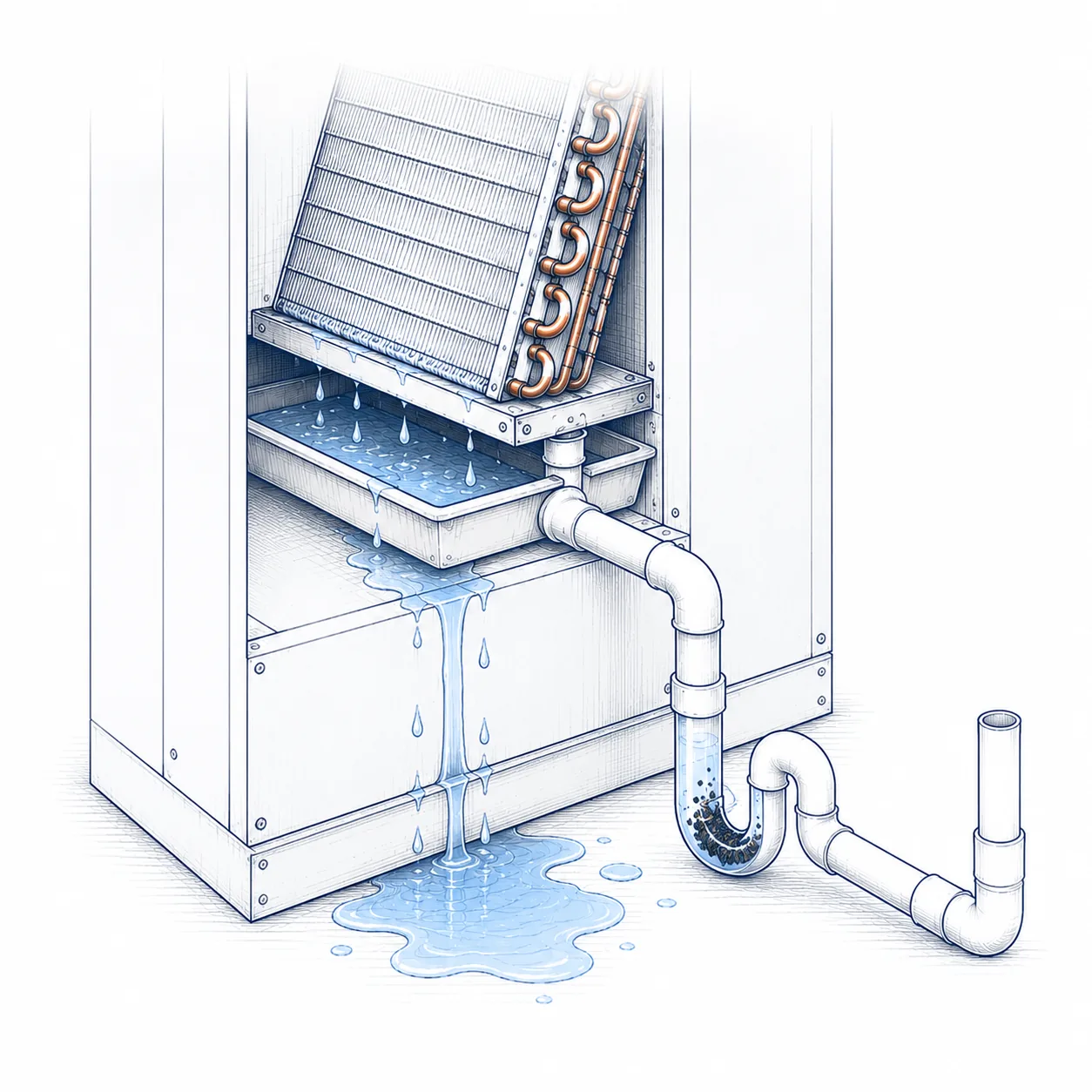
At a Glance
Water is supposed to leave your HVAC system, but only through the drain. During cooling season, the indoor coil removes moisture from the air. That water should collect in a pan and leave through a condensate drain or condensate pump.
The location, amount, and timing of the water matter.
It may also point to a blocked drain, failed pump, frozen coil, or another water source.
Homeowners can look. Technicians trace the source and diagnose the cause.
How Condensation Should Leave Your System
Air conditioning does more than lower temperature. It also removes moisture from indoor air. That water is normal, but it should follow a controlled path out of the equipment. EPA guidance on indoor air quality and moisture can help homeowners understand why moisture control matters.
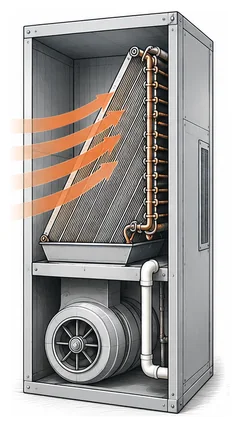
During cooling, indoor air carries moisture across the cold evaporator coil.
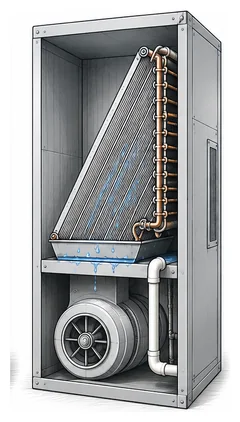
The coil removes moisture from the air. That water should drip into the pan below.
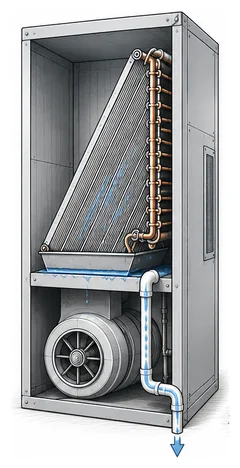
A clear drain path lets the water leave the equipment safely.
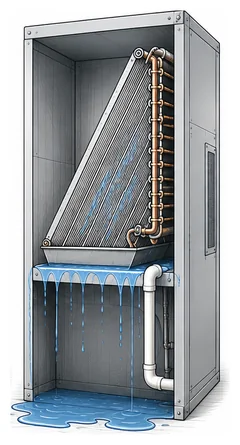
When the drain backs up or the pan overflows, water can appear around the furnace or air handler.
The goal is to trace where the water started, where it should have gone, and why it escaped the intended path.
Quick Answer
Water around a furnace or air handler is often related to condensation that is not leaving through the normal drain path. Common categories include a clogged condensate drain, a full or failed condensate pump, a damaged pan, a frozen evaporator coil thawing, restricted airflow that contributed to freezing, or a nearby plumbing source that is not HVAC-related.
Not all water around indoor HVAC equipment is an equipment leak. Refrigerant does not normally puddle as water on the floor. Water usually points to moisture, condensation, drainage, thawing ice, or another household water source near the equipment.
The practical goal is to protect the area, avoid unsafe troubleshooting, and determine whether the water is spreading, recurring, near electrical components, or connected to another symptom such as ice, weak airflow, or poor cooling.
What can I safely check?
These are safe observations. They can help describe the problem, but they are not the same as diagnosing the equipment.
Look for whether water is under the unit, near the drain, near a pump, or coming from a nearby pipe.
Notice whether it is a damp spot, a small puddle, spreading water, or repeated water after cleanup.
Note whether the AC is running, heat is running, fan only is on, or the system is off.
Look for ice on refrigerant lines, the indoor coil area, or around the indoor equipment.
Look for a drain line or condensate pump without opening panels or disassembling anything.
A heavily dirty filter can restrict airflow and contribute to freezing, which may later thaw into water.
What should I avoid doing?
Water can damage floors, ceilings, walls, and stored items.
Water near electrical equipment should be handled carefully.
Water on the floor is usually condensation, drainage, thawing, plumbing, or another water source.
The wrong product can damage components, tubing, pumps, or drain materials.
Why is there water around my furnace or air handler?
The most common HVAC-related reason is that condensation is not leaving through the normal drain path. During cooling season, the indoor coil gets cold and moisture from the air condenses on it. That water should fall into a drain pan and leave through a condensate drain or pump.
If the drain is clogged, the pump fails, the pan is damaged, or the coil freezes and then thaws, water may end up around the furnace or air handler. Water can also come from a nearby humidifier, water heater, plumbing line, drain connection, or another source close to the HVAC equipment.
Central Maryland humidity matters because humid summer air can produce a lot of condensate. Extended humid weather can make a drainage weakness show up faster than it would during mild weather.
Why does HVAC equipment make water?
Air conditioning removes humidity as part of cooling. The water is normal. Water on the floor is not the normal destination.
| Possible Source | What It Means | Why It Matters |
|---|---|---|
| Normal condensation | Moisture is removed from indoor air. | It should leave through the drain, not spread on the floor. |
| Blocked condensate drain | Water cannot flow out normally. | The pan can fill and overflow. |
| Condensate pump issue | The pump may not move water away from the equipment. | Water can back up or spill near the pump. |
| Frozen coil thawing | Ice melts after the system stops or warms up. | Thawing can create more water than the drain handles normally. |
| Dirty filter or airflow issue | Restricted airflow can contribute to freezing. | Water may appear after ice melts. |
| Plumbing or another source | The water may not be from HVAC equipment. | The correct repair depends on finding the actual source. |
An air conditioner can remove gallons of water from indoor air during humid weather. The amount is normal; uncontrolled water inside the home is the problem.
Can a frozen AC cause water on the floor?
Yes. A frozen evaporator coil can create water around the equipment when the ice melts. The system may have frozen because of restricted airflow, a dirty filter, a dirty indoor coil, blower problems, refrigerant-related conditions, or more than one condition at the same time.
This is why water and ice belong in the same diagnostic conversation. If the coil froze first, the puddle may be the result of thawing. If the drain backed up first, the water may be a drainage problem. If both are present, the technician has to separate cause from effect.
Water calls during humid summer weather often involve more than one clue: long runtime, weak airflow, a dirty filter, a frozen coil, or a drain that cannot keep up. The puddle is only the visible part of the problem.
When is this normal, and when should I be concerned?
Moisture removal is normal during cooling. Water on finished surfaces, near electrical components, or repeatedly appearing around the indoor unit deserves attention.
| Often Normal | Concerning |
|---|---|
| Water dripping from a proper outdoor condensate termination during AC operation. | Water on a finished floor, ceiling, wall, or stored belongings. |
| Condensation draining steadily during humid weather. | Overflow from the indoor unit, drain pan, or condensate pump. |
| A small amount of moisture at an outdoor drain outlet. | Water near electrical components or wiring. |
| More condensate during extended humid weather. | Repeated water after cleanup or water that spreads quickly. |
| Moisture removal during normal cooling. | Water after visible ice, weak airflow, or AC not cooling. |
Is water around my HVAC system normal?
This decision tree is educational. It helps you decide what to observe next without turning the page into a diagnosis.
- Is water near electrical components or spreading quickly?
Stop using the system and seek professional help.
- Is the water coming from a known outdoor drain discharge?
That may be normal during cooling, especially in humid weather.
- Is water on the indoor floor, ceiling, or around the unit?
Protect the area and schedule evaluation if it continues or returns.
- Was ice visible before the water appeared?
Turn cooling OFF and let the system thaw before diagnosis.
How BCR Works Diagnoses This
A professional diagnosis traces the water source and verifies the drainage path. The point is not simply to clean up the puddle. The point is to understand why the water escaped the path it was supposed to follow.
| Safe Homeowner Observation | Technician-Only Evaluation |
|---|---|
| Water is near the drain line. | Check drain pitch, trap, restriction, pan condition, and discharge path. |
| Water is near a condensate pump. | Evaluate pump operation, tubing, float action, power, and overflow behavior. |
| Ice was visible before water appeared. | Evaluate airflow, filter, coil condition, blower operation, and refrigerant-side behavior after thawing. |
| Water appears only during AC operation. | Trace condensate production and drainage during cooling. |
| Water appears when HVAC is off. | Look for plumbing, humidifier, water heater, or other nearby sources. |
How can a blocked drain become water damage?
A blocked condensate drain is a simple example of how normal water production can become a home problem.
Algae growth, debris, poor drain routing, trap issues, pump failure, or heavy condensate production during humid weather can all contribute to drainage problems.
What information should I have before calling?
Useful observations help the technician understand the situation faster. You do not need to open equipment or perform tests.
Under the unit, near the drain, near the pump, near plumbing, or on a finished surface?
Only during AC operation, after the system shuts off, or even when HVAC is off?
Damp spot, small puddle, spreading water, or repeated overflow?
Ice on refrigerant lines or around indoor equipment changes the likely path.
Some systems use a condensate pump to move water away.
Weak airflow, AC not cooling, high humidity, or system running constantly.
What happens during a professional HVAC diagnosis?
The technician looks for the source, path, and reason. Where did the water start? Where should it have gone? What stopped it from leaving correctly?
That may include checking the drain pan, drain line, trap, pump, tubing, discharge location, safety switches, coil condition, filter condition, blower operation, and signs of freezing. If the water came from a frozen coil, the technician also has to determine why the coil froze.
The right answer may be drain clearing, pump replacement, float switch installation, coil or airflow diagnosis, maintenance, or referral to a plumber if the water source is not HVAC-related.
What should I remember?
Water around indoor HVAC equipment is not automatically an emergency and not automatically a refrigerant problem. Condensation is normal during cooling. Water on the floor, near electrical components, or outside the intended drain path deserves attention.
Frozen coils, clogged drains, condensate pumps, dirty filters, heavy humidity, and non-HVAC plumbing sources can all lead to water near a furnace or air handler. Finding the source matters more than simply cleaning up the puddle.
Remember This
Water is supposed to leave your HVAC system, but only through the drain.
About This Guide
This guide was written by BCR Works, a Maryland-licensed residential HVAC company with more than 25 years of field experience. Every guide is based on real-world residential HVAC diagnostic experience and follows our repair-first philosophy: symptoms are clues, and diagnosis comes before recommendation.
Our goal is to help homeowners understand how their HVAC systems work, recognize common symptoms, and know what they can safely observe before professional service is needed. These guides are educational resources and are not a substitute for an on-site diagnosis.
Need Local HVAC Help?
If water is appearing around your furnace or air handler in Harford County, Baltimore County, or Howard County, BCR Works can trace the source, evaluate the drainage path, and recommend the practical next step.