
Why Won’t My House Reach the Temperature I Set?
When the thermostat is set to 72 but the house stays at 77, the problem is not always a failed air conditioner. This guide explains heat gain, humidity, airflow, maintenance, and equipment performance in plain English.
Serving Harford County, Baltimore County, and Howard County.
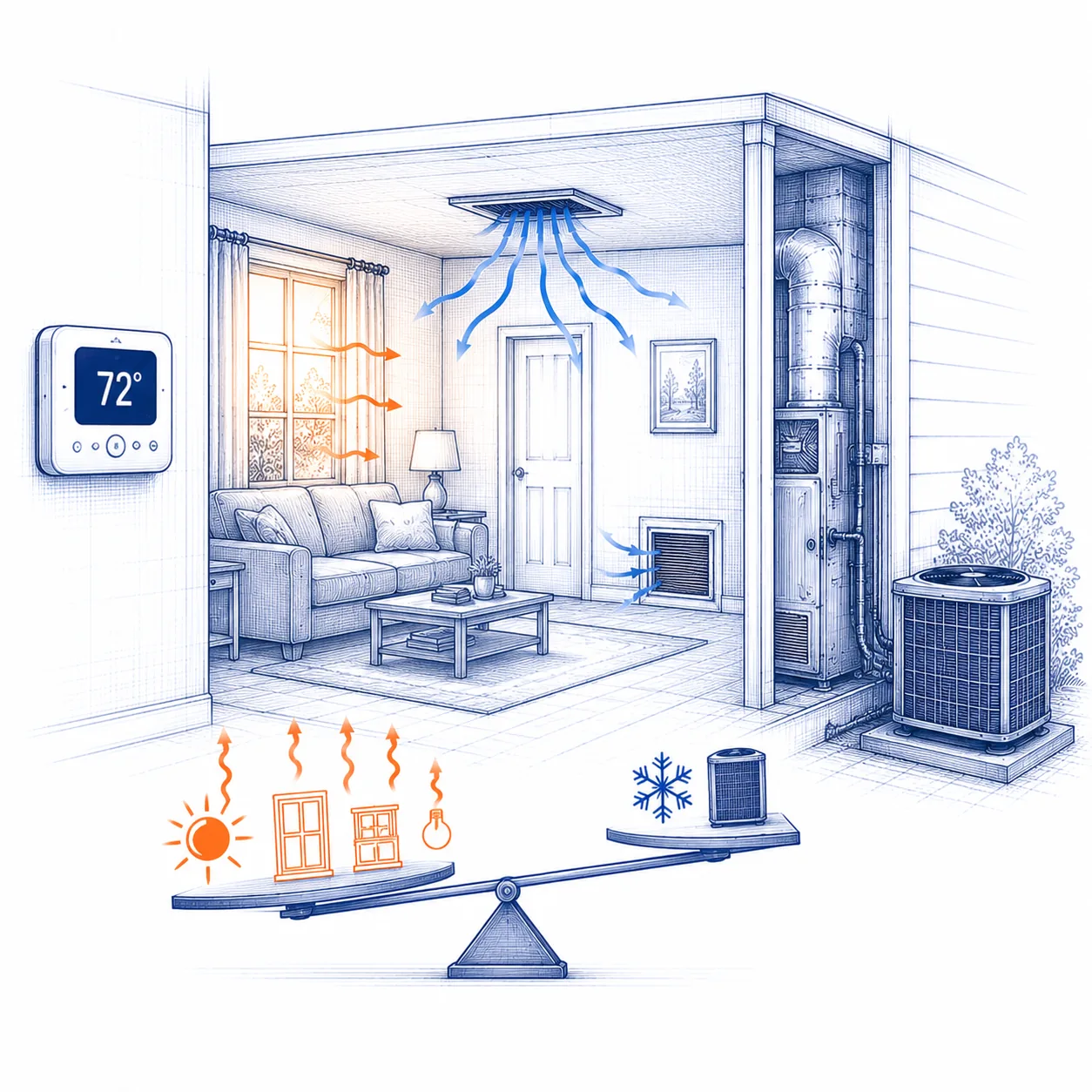
At a Glance
An air conditioner cannot cool a home faster than heat is entering it. If outdoor heat, attic heat, sun exposure, humidity, airflow restrictions, duct leakage, or maintenance conditions are adding more load than the system can remove, the home may run for hours without reaching the thermostat setting.
The system may be running, but heat removal is not keeping pace.
Weather, humidity, airflow, maintenance, ductwork, and equipment all matter.
Diagnosis should identify whether this is weather load, airflow, equipment performance, or building conditions.
How Heat Wins the Race
Cooling is a balance between heat entering the home and heat the system removes. When heat enters faster than the air conditioner can remove it, heat wins the race and the thermostat setting stays out of reach.
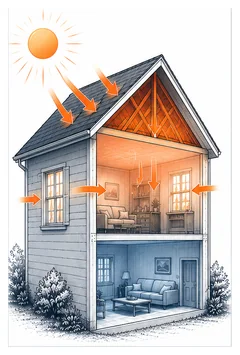
Sun, attic heat, windows, walls, humidity, appliances, and normal daily living add load.
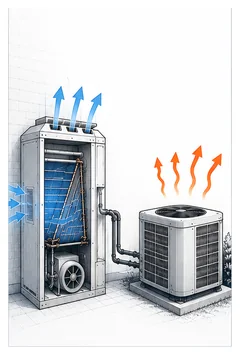
The system lowers temperature by moving heat from indoors to outdoors.
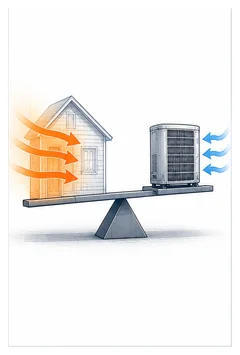
If heat enters faster than the system removes it, the home falls behind.
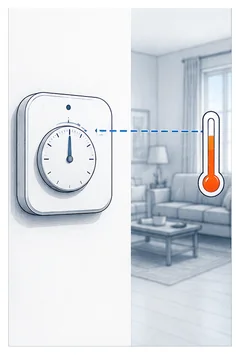
The thermostat number does not catch up until heat removal overtakes heat gain.
The next step is understanding whether weather, humidity, airflow, maintenance, ducts, home conditions, or equipment performance is causing the home to fall behind.
Quick Answer
Your house may not reach the temperature you set because the home is gaining heat faster than the HVAC system can remove it. On very hot Central Maryland days, especially during extended heat waves, a system may run much longer and recover more slowly than it does in mild weather.
Other common contributors include high humidity, dirty filters, restricted airflow, dirty indoor or outdoor coils, duct leakage, closed doors, poor return air, thermostat location, insulation gaps, attic heat, equipment condition, and system sizing.
This does not automatically mean the air conditioner has failed or needs to be replaced. A system can be affected by maintenance conditions, airflow restrictions, duct problems, or building heat gain even when major components are still operating.
What can I safely check?
These checks are safe observations. They help describe the situation without turning the homeowner into the technician.
Confirm cooling mode, setpoint, fan setting, and whether indoor temperature is rising or holding steady.
A dirty filter can reduce airflow and make it harder for the system to remove heat.
Notice whether supply vents feel weak, blocked, or very different from room to room.
Extended heat, high humidity, and direct sun can change how quickly the home recovers.
Whole-house problems differ from one hot room or one hot floor.
Sticky air can feel uncomfortable even when the temperature is close to the setpoint.
What should I avoid?
Size is only one part of cooling performance.
Lower settings do not make most systems cool faster.
This can restrict airflow and create new problems.
Symptoms are clues. Measurements identify causes.
Why does heat gain matter?
Heat gain is the heat entering the home while the air conditioner is trying to remove heat. It comes from outdoor temperature, sun on the roof and windows, attic temperature, air leaks, appliances, people, lighting, and humidity.
When heat gain is moderate, the system may reach the thermostat setting and cycle normally. When heat gain is high, the system may run for long stretches and still fall behind. That does not automatically mean the system is broken. It means the cooling load is heavy and the system needs to be evaluated in context.
Is this normal on really hot days?
Sometimes, yes. During extended heat waves, especially with high humidity, a system may run much longer than usual and recover more slowly. Central Maryland summer weather can create a heavy cooling load because the system is removing heat and moisture at the same time.
It becomes more concerning when the home never recovers, the vents blow warm air, airflow is weak, ice appears, the breaker trips, or the problem continues when outdoor conditions are milder.
| Often Normal | Deserves Evaluation |
|---|---|
| Longer runtime during an extreme heat wave. | The home gets warmer while the AC runs. |
| Slow afternoon recovery on sunny, humid days. | The system never recovers after sunset. |
| Some rooms lag behind during peak heat. | Whole-house cooling is weak or uneven every day. |
| Humidity makes the home feel warmer. | Ice, water, breaker trips, or warm air appear too. |
Does humidity affect how quickly my house cools?
Yes. Humidity changes comfort and runtime. The system has to remove moisture as well as heat. When indoor air is humid, the home may feel uncomfortable even if the temperature is slowly moving in the right direction.
High humidity can also lead homeowners to lower the thermostat, which increases runtime without always solving the comfort problem. The right question is whether the system is removing both heat and moisture normally.
Cooling is not only about lowering the number on the thermostat. Moisture removal is a major part of summer comfort.
Can a dirty filter or weak airflow cause this?
Yes. Restricted airflow can reduce how much heat the system removes from the home. A dirty filter, dirty coil, blower problem, blocked vents, duct restrictions, or return-air issue can all make the system run longer while comfort improves slowly.
Airflow problems can also contribute to frozen coils in some situations. If ice appears, cooling mode should be turned off and the system should be allowed to thaw before accurate testing.
Is my air conditioner too small?
Possibly, but that should not be the first assumption. An undersized system can struggle to reach the setpoint, but so can a dirty system, poor airflow, duct leakage, high attic heat, poor insulation, high humidity, refrigerant-related conditions, or equipment performance problems.
Replacement should be based on evidence. A repair-first diagnosis measures performance and looks at the home before deciding whether the right answer is maintenance, repair, airflow correction, duct evaluation, insulation discussion, or replacement planning.
How BCR Works Diagnoses This
An experienced technician looks for the reason the home is falling behind. The work starts by separating heat load, airflow, and equipment performance instead of assuming one failed part.
| Safe Homeowner Observation | Technician-Only Evaluation |
|---|---|
| The thermostat is set low but the home stays warm. | Measure temperature performance, airflow, and equipment operation. |
| The AC runs nearly all day. | Compare runtime with outdoor load, humidity, and system capacity. |
| Airflow feels weak. | Evaluate filter, blower, coil condition, duct restrictions, and static pressure where appropriate. |
| Some rooms are worse than others. | Evaluate duct layout, return air, sun exposure, and room heat gain. |
| The issue appears during extreme weather. | Determine whether this is expected load or an operating problem. |
Should I be concerned?
This decision aid is educational. It helps homeowners decide when professional evaluation makes sense.
- Is this only happening during extreme heat?
Slow recovery may be weather-related, especially if the home improves later.
- Is the home getting warmer while the system runs?
That deserves evaluation of airflow, cooling performance, and heat load.
- Are there warning signs?
Ice, water, breaker trips, burning smell, warm air, or very weak airflow should be diagnosed.
- Is maintenance overdue?
Filter, coil, drain, and airflow conditions can affect how well the system catches up.
What should I note before calling?
Example: set to 72, indoor temperature stays at 77.
Morning, afternoon, evening, heat waves, or all the time.
Whole house, upstairs, one room, or one side of the home.
Does the AC shut off or run continuously?
When was the filter last changed?
Warm air, weak airflow, ice, water, noise, smell, or breaker trips.
What should I remember?
A house that will not reach the thermostat setting is not automatically proof that the air conditioner is failing or too small. The home may be gaining heat faster than the system can remove it, or the system may not be moving and removing heat as effectively as it should.
The best next step is to look at the whole pattern: weather, humidity, airflow, filter condition, room differences, runtime, equipment performance, and maintenance history. Diagnosis protects homeowners from guessing and helps separate normal peak-weather behavior from repairable problems.
Remember This
An air conditioner cannot cool a home faster than heat is entering it. The thermostat tells you the home is behind; diagnosis explains why.
About This Guide
This guide was written by BCR Works, a Maryland-licensed residential HVAC company with more than 25 years of field experience. Every guide is based on real-world residential HVAC diagnostic experience and follows our repair-first philosophy: symptoms are clues, and diagnosis comes before recommendation.
Our goal is to help homeowners understand how their HVAC systems work, recognize common symptoms, and know what they can safely observe before professional service is needed. These guides are educational resources and are not a substitute for an on-site diagnosis.
Need Local HVAC Help?
If your home will not reach the temperature you set in Harford County, Baltimore County, or Howard County, BCR Works can evaluate cooling performance, airflow, humidity, and the conditions affecting comfort.