
Fast, Honest Gas Furnace Repair & Services
Is your gas furnace cycling on and off, blowing lukewarm air, or raising safety concerns with strange smells and noises? BCR Works provides transparent, expert gas furnace repair, maintenance, and replacement across Baltimore, Harford, and Howard Counties.
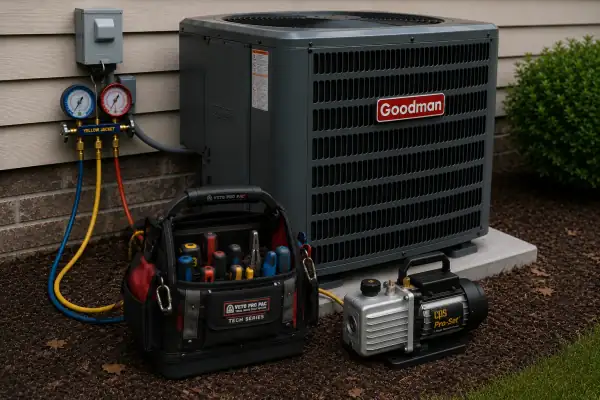
Diagnostic Visit Pricing
$99 during regular business hours (Mon–Fri, 7am–6pm) · $129 for after-hours emergency dispatch. This fee covers the technician’s time, travel, and a full diagnostic evaluation of your system.
Why Central Maryland Homeowners Trust BCR Works
Clear, Documented Findings
We do not ask you to blindly trust us. We walk you through exactly what we tested, what the readings showed, and what failed — in plain language, before any repair work begins.
No Hidden Pricing Surprises
We charge by the job, not by the hour. You receive a firm, straightforward, written price for approval before any furnace repair work begins.
True Gas Heating Experts
Gas furnaces rely on ignition timing, combustion airflow, safety limits, flame rectification, and gas pressure. Our technicians test the sequence instead of guessing at parts.
🛑 Sticker Shock From a Competitor’s Furnace Quote?
If another local HVAC company just left your house and dropped a massive, multi-thousand-dollar furnace repair or replacement estimate on you, do not panic. Click your diagnosed component below to review an honest breakdown of the part, real failure symptoms, and the exact questions to ask before approving the work.
If a major furnace repair has you weighing both paths, use the Repair vs. Replacement Assessment to organize the evidence before committing.
1. Heat Exchanger & Structural Cells Guide →
The safety-critical repair that must be proven with real evidence.2. Draft Inducer Fan Motor Assembly →
Second-opinion diagnosis before buying an expensive motor.3. Electronic Hot-Surface Igniter (HSI) →
A common no-heat fault that should not become a replacement pitch.4. Flame Rectification Sensor Probe →
Testing micro-amps before blaming the furnace brain.5. Main Control Board & Safety Limits →
Separating true board failure from safety lockouts.Have a Written Competitor Estimate in Hand Right Now?
Call 443-785-HVAC and we can walk through it with you before you approve any work.
Understanding Your Furnace’s Common Failure Points
A gas furnace involves more safety-critical components than most other home systems — it’s managing combustion, venting, and ignition timing, not just moving air. Most furnace service calls in Central Maryland trace back to one of five areas: the heat exchanger, the draft inducer motor, the igniter, the flame sensor, or the main control board.
These failures range from a quick, inexpensive fix to a genuine safety concern, and they don’t always look different to an untrained eye — a dirty flame sensor and a cracked heat exchanger can produce similar symptoms but mean very different things for your family’s safety and your wallet. That’s why BCR Works tests the specific component and verifies safety conditions before recommending work, and why we’ve written a full breakdown for each of the five areas above. If you’ve already gotten a quote from another company, those guides will help you understand exactly what should have been tested before that number was written down.
🔄 Time for a Fresh Start? Zero-Pressure System Replacement
If your gas furnace is over 15 to 20 years old, has a confirmed cracked heat exchanger, or keeps breaking down during peak Maryland winter drops, dumping thousands into high-ticket repairs is rarely a sound financial choice. BCR Works provides straightforward, zero-pressure system replacements. We properly size equipment for Maryland’s seasonal demands and keep the repair-versus-replace conversation grounded in heating safety, reliability, utility cost, and warranty value. Homeowners reviewing furnace safety concerns can also review NFPA’s heating safety guidance.
Schedule Replacement Estimate🔥 Seasonal Tune-Ups That Actually Prevent Breakdowns
Most cheap furnace tune-ups are a quick wipe-down followed by a sales pitch. At BCR Works, gas furnace maintenance is a technical inspection designed to catch hidden electrical, safety, airflow, and combustion wear before it becomes a middle-of-the-night emergency.
Gas Furnace Diagnostics & FAQ
Common gas furnace failure patterns homeowners ask about before scheduling diagnostic service.