
Why Is My Electric Bill So High?
A higher electric bill can be frustrating because the cause is not always obvious. This guide explains how HVAC runtime affects home energy efficiency, what you can safely check, and when professional diagnosis makes sense.
Serving Harford County, Baltimore County, and Howard County.
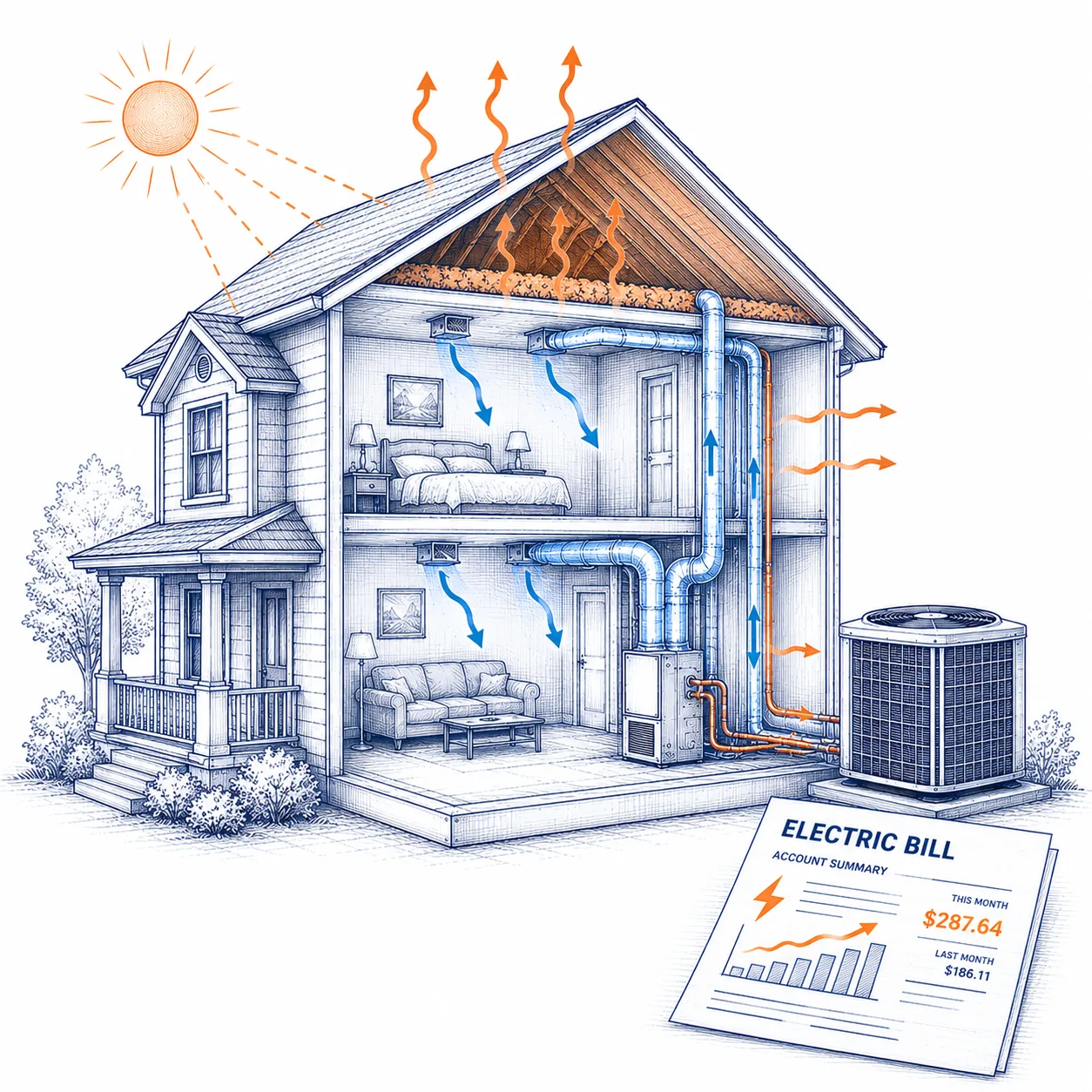
At a Glance
A higher electric bill means energy use changed. HVAC can be a major part of that during cooling season, but the bill alone does not diagnose the cause. Weather, thermostat settings, airflow, maintenance history, home conditions, and equipment performance all matter.
Runtime is often the bridge between heat load and higher cost.
The cause may be normal weather, home conditions, maintenance, or a repair issue.
Compare weather, runtime, comfort, airflow, filter condition, and warning signs.
How Your Electric Bill Goes Up
A higher bill usually comes from more energy used over time. With HVAC, that often means the system is running longer because the home has more heat or humidity to remove, or because the equipment is not moving heat as efficiently as it should.
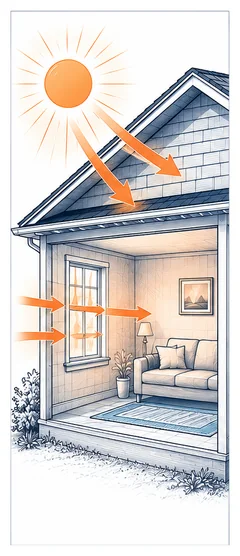
Sun, outdoor temperature, air leaks, and humidity increase the cooling load.
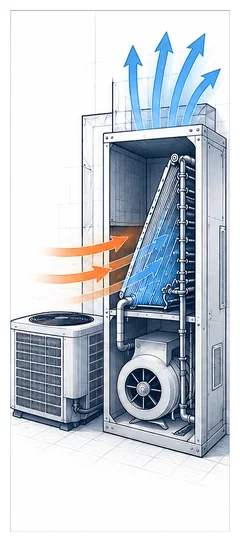
The system moves heat from indoors to outdoors to keep the home comfortable.
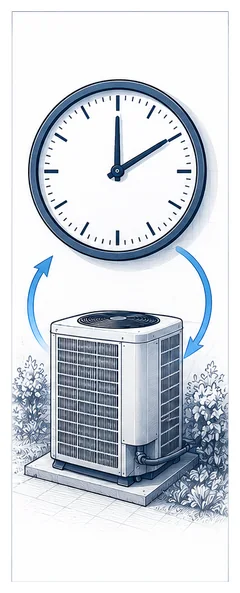
When the load is higher or performance drops, the system may need more time to catch up.
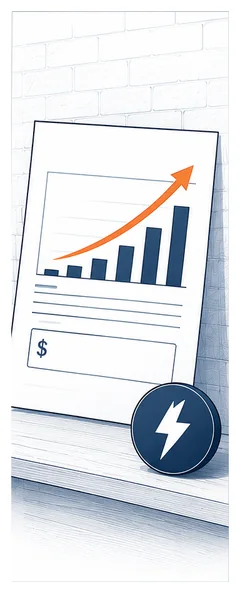
More operating time usually means more electricity used and a higher bill.
The next step is understanding why the system ran longer: weather, heat gain, airflow, maintenance, equipment condition, or a combination.
Quick Answer
Your electric bill may be high because your HVAC system ran longer than usual or worked harder than usual. That can happen during hot weather, humid weather, extended heat waves, dirty filter conditions, airflow restrictions, dirty indoor or outdoor coils, thermostat changes, open doors or windows, duct leakage, aging equipment, blower concerns, electrical concerns, or refrigerant-related conditions.
HVAC is often one of the largest electrical loads in a home during summer, but it should not be blamed automatically. A bill can rise because the home gained more heat, because the system ran more hours, or because the equipment had to work harder due to a maintenance or mechanical condition.
What can I safely check?
These observations help separate normal seasonal use from signs that the HVAC system deserves evaluation.
Compare this bill to last month and the same month last year.
Look for lower setpoints, schedule changes, or fan settings that changed.
A heavily dirty filter can restrict airflow and increase runtime.
Grass clippings, cottonwood, leaves, or shrubs can restrict outdoor airflow.
Notice humidity, uneven temperatures, warm rooms, or slow cooling.
Notice whether the AC cycles normally or seems to run nearly all day.
What should I avoid doing?
Higher use can come from weather, maintenance, settings, or repairable conditions.
Energy problems need measurements and operating context, not guesses.
If the system is struggling, a lower setting may increase runtime without solving the cause.
Those are not normal billing clues. They deserve professional attention.
Why does hot weather increase my bill?
Hot weather increases the amount of heat entering the home. The air conditioner has to remove that heat before the home can feel comfortable. During a mild day, the system may cycle on and off normally. During an extended heat wave, the same system may run much longer because the home keeps gaining heat.
Central Maryland humidity adds another layer. The system is not only lowering air temperature. It is also removing moisture from the air. That moisture-removal load can make comfort take longer, especially during humid stretches when the home keeps absorbing moisture from outdoor air, open doors, crawl spaces, basements, or air leaks.
Can a dirty filter increase energy use?
Yes. A dirty filter can restrict airflow. When airflow drops, the system may remove heat less effectively, run longer, and create additional stress on the cooling process. A dirty filter can also contribute to freezing in some situations, which can make the system cool poorly or stop cooling normally.
The filter is only one possibility. A clean filter does not prove the system is healthy, and a dirty filter does not prove it is the only cause. It is one of the easiest safe observations for a homeowner to make before service.
Does longer runtime always mean something is wrong?
No. Longer runtime can be normal during very hot or humid weather. An air conditioner may run for long stretches when outdoor conditions are severe, especially in homes with strong afternoon sun exposure, attic heat, older insulation, air leakage, or large humidity loads.
Runtime becomes more concerning when it appears with other symptoms: the home keeps getting warmer, vents blow warm air, airflow feels weak, ice forms, the breaker trips, or the system never reaches the thermostat setting even after outdoor conditions improve.
| Often Normal | Concerning |
|---|---|
| Higher bills during an extended heat wave. | A sudden increase without a clear weather or usage change. |
| Longer runtime during humid weather. | AC running all day while the house gets warmer. |
| More use after lowering the thermostat. | Warm air from vents or weak airflow. |
| Seasonal increase compared with mild months. | Ice on refrigerant lines or indoor equipment. |
| More use after doors or windows were open. | Repeated breaker trips, burning smell, or unusual electrical behavior. |
Does humidity affect my electric bill?
Humidity can affect both comfort and runtime. Moist air can make the home feel warmer even when the thermostat number looks reasonable. The AC has to spend part of its runtime removing moisture, not just lowering temperature.
When humidity is high, homeowners may lower the thermostat to feel more comfortable. That can increase runtime again. This does not mean the homeowner did anything wrong; it means comfort is more than temperature alone.
In humid summer weather, an air conditioner is doing two jobs at once: removing heat and removing moisture. Both can affect how long it runs.
Does a higher bill always mean my AC needs repair?
No. A higher bill may be caused by normal weather, rate changes, thermostat settings, more people in the home, doors opening more often, or other electrical loads. But it can also be connected to HVAC conditions that deserve attention.
Repair may be appropriate if the system is running longer because airflow is restricted, coils are dirty, the blower is not moving air properly, the outdoor unit is not rejecting heat well, electrical components are weak, or the refrigerant side is operating outside normal range. Replacement may be part of a future conversation for some older systems, but it should not be the first assumption.
How BCR Works Diagnoses This
An experienced technician looks for the reason runtime or energy use changed. That means asking two questions at the same time: is the home asking for more cooling, and is the equipment delivering cooling normally?
| Safe Homeowner Observation | Technician-Only Evaluation |
|---|---|
| The AC runs much longer than usual. | Check temperature performance, airflow, coil condition, thermostat operation, and operating conditions. |
| The home feels humid. | Evaluate runtime, coil performance, airflow, drainage, and whether the system is removing moisture normally. |
| The filter is dirty. | Determine whether filter restriction caused or only contributed to poor performance. |
| The outdoor unit looks dirty. | Evaluate condenser coil condition, fan operation, refrigerant-side behavior, and heat rejection. |
| The system is older. | Measure actual performance before assuming replacement is the best answer. |
Should I schedule service?
This decision tree is educational. It helps decide when professional evaluation is practical without pretending the bill itself diagnoses the system.
- Did the bill increase during extreme heat or humidity?
Compare weather, runtime, and last year’s bill first. The increase may be seasonal.
- Is the home comfortable and cooling normally?
If yes, continued observation may be reasonable. If no, look for comfort or airflow symptoms.
- Are there warning signs like ice, breaker trips, burning smell, or warm air?
Schedule professional diagnosis. These are not just billing concerns.
- Has maintenance been missed or the filter been neglected?
Maintenance may be the right first step, but diagnosis is appropriate if operation is abnormal.
What information should I have before calling?
Good information helps the technician understand whether the concern is comfort, energy use, equipment operation, or all three.
Compare this bill with last month and the same month last year.
Note cooling setpoint, fan setting, and any schedule changes.
Does the AC cycle off or seem to run continuously?
Is the home cool, humid, uneven, or getting warmer?
When was the filter last changed, and what condition is it in?
Warm air, weak airflow, ice, water, noise, smell, or breaker trips.
What should I remember?
A high electric bill does not automatically mean the HVAC system is failing. It means energy use changed. The reason may be weather, humidity, thermostat settings, home conditions, missed maintenance, airflow restrictions, dirty coils, aging equipment, or a mechanical issue.
The best next step is to look for patterns and symptoms. If the system is comfortable and the increase matches extreme weather, continued observation may be reasonable. If the system runs constantly, struggles to cool, freezes, trips breakers, blows warm air, or has weak airflow, professional diagnosis is appropriate.
Remember This
A higher electric bill is usually the result of longer runtime or heavier load. The bill is the clue, not the diagnosis.
About This Guide
This guide was written by BCR Works, a Maryland-licensed residential HVAC company with more than 25 years of field experience. Every guide is based on real-world residential HVAC diagnostic experience and follows our repair-first philosophy: symptoms are clues, and diagnosis comes before recommendation.
Our goal is to help homeowners understand how their HVAC systems work, recognize common symptoms, and know what they can safely observe before professional service is needed. These guides are educational resources and are not a substitute for an on-site diagnosis.
Need Local HVAC Help?
If your electric bill changed and your HVAC system is running longer, struggling to cool, or showing warning signs in Harford County, Baltimore County, or Howard County, BCR Works can evaluate the system and explain practical next steps.