
Why Is My Furnace Blowing Cold Air?
Cold air from the vents is an observation, not a confirmed failed part. The timing, thermostat fan setting, airflow strength, equipment type, and what the system does before and after the air turns cool determine the next diagnostic direction.
Serving Harford County, Baltimore County, and Howard County.
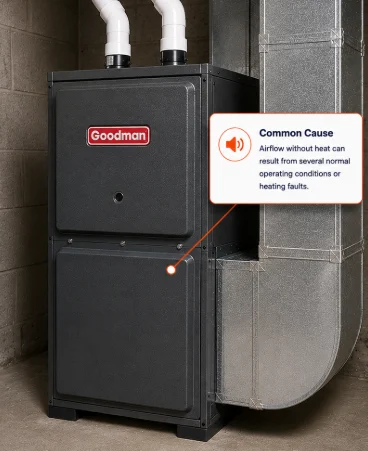
At a Glance
A heating system can move air that feels cool for several different reasons. The useful evidence is not simply that the vents feel cold. It is when the air becomes cool, whether heat was established first, how long the blower runs, and whether the thermostat is satisfied.
The air may begin cool, remain cool, or change from warm to cool during the cycle.
A brief cool start, a normal post-cycle delay, and continuously cold airflow are not the same operating pattern.
Avoid repeated restarts or equipment access, and request diagnosis when heat is not established or maintained.
How a Furnace Heating Cycle Should Work
A normal heating cycle follows an operating sequence. Understanding the sequence helps separate a brief transition in vent-air temperature from a furnace that never establishes or maintains heat.
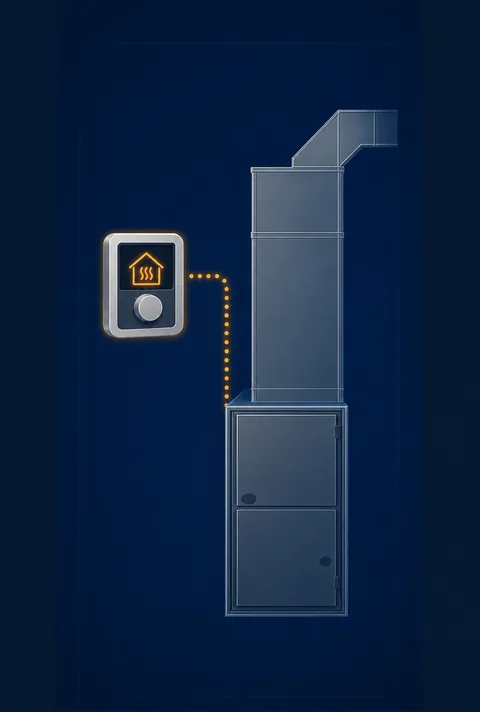
The thermostat compares room temperature with the setpoint and sends a heat command to the system.
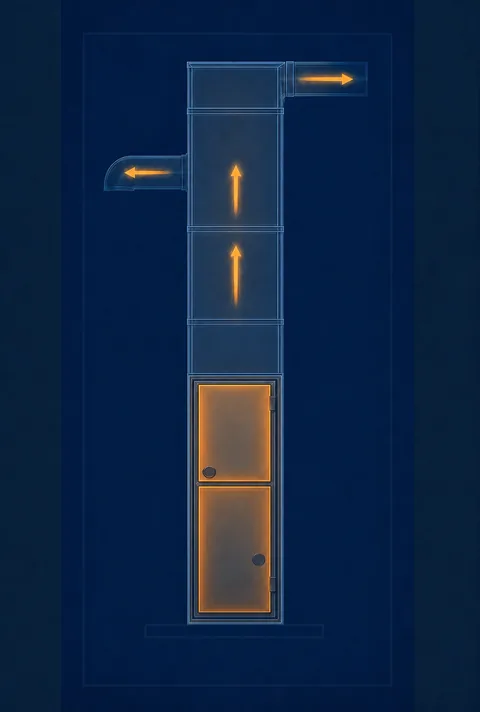
Controls and safeties must permit the furnace to establish and maintain heat before the blower delivers sustained warm air.
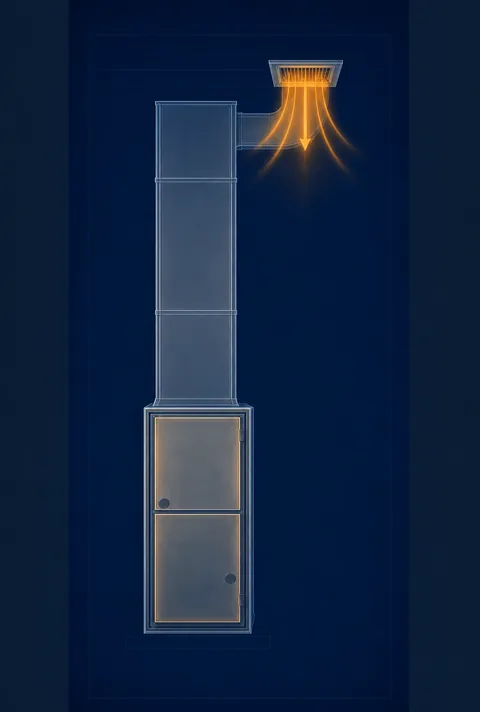
Once the sequence is ready, the blower moves air through the supply trunk, branch ductwork, and vents.
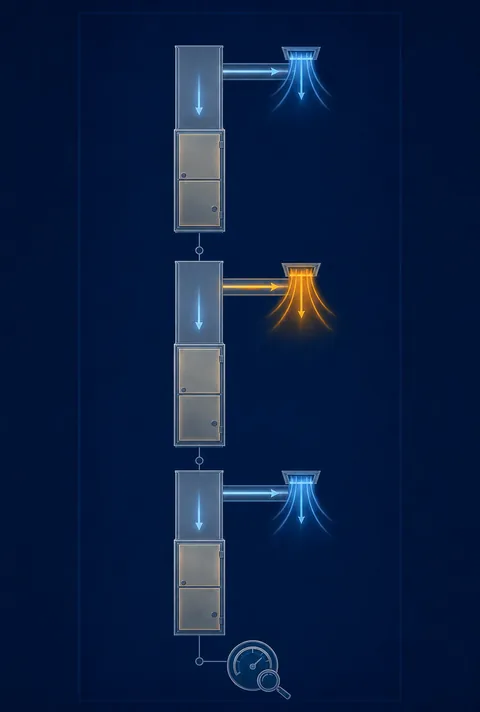
Notice whether air begins cool, becomes warm, changes back to cool, or continues briefly after the thermostat is satisfied.
The pattern helps determine what should be tested, but it does not identify a flame sensor, igniter, control board, safety limit, thermostat, heat exchanger, or any other repair by itself.
Quick Answer
A furnace may appear to blow cold air during a brief start-up period, during a short blower delay after the thermostat is satisfied, or when the thermostat fan is set to ON and circulates room-temperature air between heating cycles. Those patterns are different from a blower that runs while heat never begins, heat that starts and stops too early, weak airflow, repeated start attempts, or a home that continues losing temperature.
Equipment type also matters. Heat-pump supply air often feels less intensely hot than gas-furnace air even when the system is operating normally. Confirming whether the home uses a gas furnace, heat pump, or another system changes how the symptom should be interpreted.
The observed pattern can narrow the diagnostic direction, but it does not confirm a flame sensor, igniter, control board, safety limit, thermostat, heat exchanger, or any other repair. If heat is not established or maintained, schedule professional diagnosis instead of repeatedly restarting the equipment.
What can I safely check?
These are observation steps. They help describe the operating pattern without asking a homeowner or resident to become the technician.
Confirm that the thermostat is in HEAT mode and set above the displayed room temperature.
Notice whether the fan is set to AUTO or ON. ON can circulate room-temperature air between heat calls.
Note whether the thermostat display appears normal or shows an alert, blank screen, or unexpected mode.
Does air feel strong, weak, or different between rooms?
Does the air start cool, remain cool, become warm, or change from warm back to cool?
Does the furnace start once, stop early, or repeatedly attempt to operate?
Without opening equipment panels, note an accessible dirty filter or blocked supply and return grilles.
Note unusual clicking, humming, buzzing, electrical odor, smoke, or gas odor.
Is the home maintaining temperature, warming slowly, or continuing to get colder?
Note recent thermostat, furnace, electrical, maintenance, outage, or service work.
What should I avoid?
Internal electrical, fuel-burning, and moving components require qualified service.
Control-voltage and line-voltage testing should be performed safely with proper instruments.
Combustion evaluation is not a homeowner observation step.
Cleaning or replacing the most commonly discussed part can miss the actual cause.
Safety controls must remain in place and be evaluated as part of the operating sequence.
Repeated attempts can change the evidence and may continue an unsafe condition.
Why is my furnace blowing cold air?
The same reported symptom can represent normal sequence timing, thermostat fan behavior, heat that is never established, heat that begins and stops early, an airflow or distribution condition, intermittent operation, or confusion about whether the equipment is a furnace or heat pump.
That is why a useful description includes the complete pattern. “The air is cold for thirty seconds and then becomes warm” is different from “the blower runs continuously and the air never warms.” “The air becomes cool only after the thermostat reaches its setpoint” is different from “the air becomes cool while the indoor temperature is still falling.”
Is brief cool air when the blower starts or stops normal?
A short period of cooler air can occur before delivered air feels fully heated. A blower may also run briefly after the thermostat is satisfied to move remaining heat through the ductwork. The duration, recurrence, and result of the cycle matter.
If the air becomes warm and the home reaches the thermostat setting, a brief transition may be part of normal operation. If the air never becomes warm, becomes cool before the setpoint is reached, or the system repeatedly starts and stops, the pattern deserves diagnosis.
Can the thermostat fan setting cause cool air?
When the thermostat fan is set to ON, the blower may circulate room-temperature air even when the furnace is not actively heating. That air can feel cool compared with body temperature or recently heated supply air. With the fan set to AUTO, the blower normally operates in response to the equipment’s heating-cycle controls.
The fan setting can explain cool air between otherwise normal heating cycles, but it should not be used to dismiss persistent no-heat, early shutdown, repeated attempts, unusual odors, or a home that continues getting colder.
Air can feel cool without being refrigerated. Continuous circulation may move room-temperature air that feels cooler than your skin, especially after a warm heating cycle ends.
Why does the air start warm and later become cool?
Warm air followed by a brief cool-air period after the thermostat is satisfied may reflect the blower finishing the cycle. Warm air that becomes cool before the thermostat is satisfied is a different pattern because the furnace may have stopped producing heat while airflow continued.
Repeated warm-to-cool changes can also accompany intermittent operation or repeated start attempts. A technician needs to observe the sequence and verify why heat stopped instead of treating the vent temperature as proof of one component failure.
Why does the blower run without sustained heat?
The blower can move air while the heating sequence is not established or while heat has stopped. From the living space, the safe evidence is the thermostat command, airflow timing, vent-air pattern, sounds, odors, and whether the system retries.
Homeowners should not open the furnace to look for burner operation or internal status. Professional diagnosis can determine whether the thermostat command, operating sequence, controls, safeties, electrical conditions, airflow, or furnace operation explain the pattern.
Can weak airflow make the heat feel inadequate?
Weak airflow can make delivered heat feel less effective and can prevent rooms from warming evenly. Filter condition, closed or blocked grilles, duct distribution, blower operation, and other airflow conditions may provide useful context.
Airflow is still not a parts diagnosis. A dirty filter or obstructed grille may contribute to the operating condition, may be a separate maintenance issue, or may not explain why heat stopped. Diagnosis separates contributing conditions from the actual cause.
Why does the furnace run while the home stays cold?
A system can appear to run while the home loses temperature if delivered heat is intermittent, airflow is inadequate, distribution is uneven, the equipment cannot maintain the heating sequence, or the building load exceeds what the system is delivering under the current conditions.
Record the indoor temperature trend, approximate runtime, airflow strength, whether any vents become warm, and whether the thermostat remains in a heat call. Those observations help professional HVAC diagnosis and second opinions begin with evidence rather than a replacement assumption.
Could this be a heat pump rather than a gas furnace?
Heat-pump supply air often feels less intensely hot than air from a gas furnace. During normal operation it may feel warm rather than hot, and equipment type changes how vent temperature and auxiliary heat should be interpreted.
If you are unsure which system serves the home, note the thermostat mode and visible equipment without opening panels. The Heat Pump FAQ provides additional equipment-specific context without turning this furnace symptom into a do-it-yourself diagnosis.
What does the timing pattern change?
| Observed Pattern | What It May Change Diagnostically | What Still Must Be Verified |
|---|---|---|
| Air is briefly cool when the blower first starts. | Start-up timing and whether heat is ultimately established matter. | Normal sequence timing and delivered-air temperature. |
| Warm air is followed by a short cool-air period after the thermostat is satisfied. | End-of-cycle blower timing may explain the transition. | That the heat call ended normally and the next cycle heats correctly. |
| The blower runs and the air never becomes warm. | Heat may not be established while airflow continues. | The thermostat command and complete furnace operating sequence. |
| Air begins warm and becomes cool before setpoint is reached. | Heat may be stopping before the call is complete. | Why the heating sequence stopped and whether a safety or control response occurred. |
| The furnace repeatedly attempts to start. | Intermittent sequence behavior becomes important evidence. | Controls, safeties, electrical conditions, and furnace operation. |
| The symptom is intermittent. | Weather, outages, recent work, timing, and recurrence may help reproduce it. | Operating conditions when the symptom is present. |
| The home does not warm despite runtime. | Delivered heat, airflow, distribution, and building load all matter. | Temperature change, airflow, sequence, and system capacity under current conditions. |
How BCR Works Diagnoses This
An experienced technician confirms the equipment type and thermostat command, observes the operating sequence, and verifies whether heat is established and maintained. Measurements separate the visible symptom from the condition that actually caused it.
| Safe Homeowner Observation | Technician-Only Evaluation |
|---|---|
| Fan is set to AUTO or ON. | Confirm thermostat commands and equipment response. |
| Air starts cool, stays cool, or changes from warm to cool. | Observe the sequence and verify whether heat is established and maintained. |
| Airflow is strong or weak. | Measure temperature change, airflow, and distribution conditions. |
| The furnace stops early or repeatedly retries. | Test controls, safeties, electrical conditions, and furnace operation. |
| The home maintains temperature or continues getting colder. | Compare delivered heat with runtime, airflow, weather, and building load. |
| There is an unusual sound, electrical odor, smoke, or gas odor. | Follow appropriate safety procedures and inspect the affected system with qualified tools. |
What should I do next?
This decision aid is educational. It keeps the homeowner boundary clear while organizing the observations that matter most.
- Is there a gas odor, smoke, visible arcing, electrical burning, or immediate fire danger?
Stop operation, leave the area, and seek appropriate emergency assistance.
- Is the thermostat fan set to ON?
Note whether cool air occurs between otherwise normal heating cycles. Do not assume this explains persistent no-heat.
- Does heat begin and satisfy the thermostat before a brief cool-air period?
Note the duration and monitor whether the next cycle heats normally.
- Does heat never begin, stop early, or allow the home to keep getting colder?
Stop repeated restart attempts and schedule professional diagnosis.
What should I note before calling?
Provide the service address and unit number when applicable.
Mode, setpoint, displayed temperature, fan position, and any alert.
Does air start cool, stay cool, become warm, or change from warm to cool?
Strong or weak, and whether the condition affects every room.
Does the furnace start, stop early, or repeatedly retry?
How long before the air changes, and how often does the pattern repeat?
Clicking, humming, buzzing, gas odor, electrical odor, or smoke.
Current reading and whether it is stable or falling.
Thermostat, maintenance, electrical, outage, furnace, or other service work.
Whether the system is known to be a gas furnace or heat pump.
For managed properties, include the best contact and access or scheduling information.
What should I remember?
Cold air is the observed symptom. Timing, operating sequence, airflow, thermostat behavior, temperature trend, and equipment type determine what should be tested next.
Safe observations can make diagnosis faster, but they should not become a guessed component repair. Avoid equipment access and repeated restart attempts when heat is not established or maintained.
Remember This
Cold air from the vents does not identify a failed part. The useful evidence is when the air becomes cool and what the heating system does before and after that change.
About This Guide
This guide was written by BCR Works, a Maryland-licensed residential HVAC company with more than 25 years of field experience. Every guide is based on real-world residential HVAC diagnostic experience and follows our repair-first philosophy: symptoms are clues, and diagnosis comes before recommendation.
Our goal is to help homeowners understand how their HVAC systems work, recognize common symptoms, and know what they can safely observe before professional service is needed. These guides are educational resources and are not a substitute for an on-site diagnosis.
Need Local HVAC Help?
If your furnace is blowing cold air in Harford County, Baltimore County, or Howard County, BCR Works can evaluate the thermostat command, heating sequence, airflow, and the reason heat is not being established or maintained.