
Draft Inducer Fan Motor Replacement: Second Opinion & Pricing Guide
Expert HVAC Solutions Across Harford, Baltimore, and Howard Counties
A homeowner-first second-opinion guide for Central Maryland families who were just told their furnace needs a draft inducer motor assembly, pressure switch, or major heating repair.
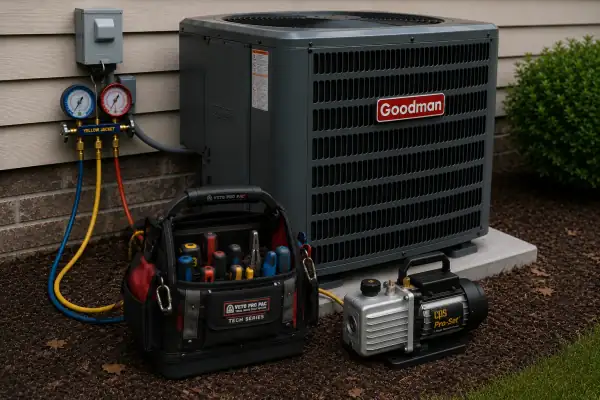
Voltage, pressure switch, flue, and motor amperage checks before expensive parts are approved.
🛑 Facing a High-Pressure Quote for a Draft Inducer Motor?
If another HVAC company just told you the small exhaust fan in your gas furnace is bad, you may be staring at a quote that feels bigger than the symptom. The draft inducer is a real safety component, and when it fails, the furnace should not light. But this diagnosis is also easy to over-sell when a simple blocked pressure tube, clogged vent, or drainage issue is the real cause. Before you approve a motor assembly or let someone turn a no-heat call into a full furnace replacement pitch, get the diagnosis verified with actual electrical and pressure data.
💬 The Plain-English Translation: What Does It Do?
The Analogy: Think of the draft inducer motor as the furnace’s mechanical chimney starter. Before gas is released and burners ignite, this small fan clears the combustion chamber, pulls fresh air into the burner path, and pushes exhaust gases toward the flue. Once it proves the furnace can breathe safely, the pressure switch allows the ignition sequence to continue. If the inducer cannot move enough air, the furnace control board stops the heat cycle on purpose.
🔍 Symptoms Homeowners Usually Notice
When an inducer motor, pressure switch, or vent path is causing the no-heat condition, homeowners in Bel Air, Towson, Columbia, Ellicott City, Fallston, and Nottingham often notice one of these patterns:
- The cabinet hum: The thermostat calls for heat, you hear a hum or click near the furnace cabinet, but the burners never light.
- The grinding startup: The furnace begins its startup sequence, but a harsh screeching, rattling, or bearing noise comes from the inducer area.
- The pressure switch code: The furnace flashes an LED fault for pressure switch, venting, or ignition lockout even though the inducer appears to spin.
- The intermittent no-heat call: The furnace works sometimes, then randomly locks out during colder nights when longer run cycles expose weak airflow, moisture, or motor problems.
How a Professional BCR Works Technician Verifies the Failure:
We do not replace an inducer motor just because the furnace will not light. We verify whether the control board is sending full voltage to the motor, test motor response and running current, inspect the pressure switch tubing and sensing port, check the first section of the flue for blockage, and look for condensate drainage problems that can mimic motor failure. If the motor receives proper voltage but will not start, runs with failed bearings, pulls abnormal amperage, or shows winding failure, then the assembly has earned the diagnosis.
⚠️ How We Verify This: The Pressure Switch Trap
A failed inducer motor stops the furnace before ignition, which makes it a convenient part to quote aggressively. The sales trap is simple: blame the motor, skip the pressure switch pathway, and use the no-heat urgency to push a large repair or replacement decision.
Don’t wait on a risk like this — get it verified.
🔧 The “Before We Condemn It” Checklist
When BCR Works audits a draft inducer diagnosis, we walk through the failure path in order instead of jumping to the most expensive part:
- Voltage confirmation: We test whether the furnace board is sending the proper 120-volt signal to the inducer motor.
- Pressure pathway inspection: We inspect tubing, ports, pressure switch response, and visible obstructions before blaming the motor.
- Flue and drain review: We check vent restrictions and condensate drainage issues that can cause nuisance lockouts on high-efficiency furnaces.
- Motor amperage and sound check: We compare actual motor behavior against the failure claim, including bearing noise, locked rotor symptoms, and abnormal amp draw.
⚖️ The Big Dilemma: Repair vs. Replace?
A draft inducer motor is normally a repairable component. The bigger question is whether the rest of the furnace justifies the repair investment.
- When to REPAIR: If the furnace is otherwise safe, the heat exchanger is intact, the unit is not at the end of its service life, and the inducer failure is clearly proven, replacing the assembly can be a practical repair.
- When to slow down and review replacement: If the furnace is 15 to 20 years old, has recurring safety lockouts, has a suspect heat exchanger, or needs several major parts at once, it may be smarter to compare repair cost against a properly sized replacement with a fresh warranty.
⏱️ Logistics & Expectations
- Availability: Draft inducer assemblies are matched by furnace brand, model, cabinet layout, motor voltage, wheel design, and venting style. Modern high-efficiency furnaces usually require a specific OEM assembly.
- Labor Intensity: Most confirmed inducer motor replacements are low-to-medium intensity repairs, usually taking 1 to 2 hours on site once the correct part is available.
- Safety Verification: After replacement, the furnace should be run through a full ignition sequence with gasket sealing, pressure switch operation, flue draft, and combustion safety behavior verified.
What Does This Repair Typically Cost?
Typical price range for this repair: $800–$1,400, depending on your specific system and part accessibility. The exact number is confirmed during your diagnostic visit — we test the specific failure point before quoting, rather than guessing.
❓ Frequently Asked Questions (Draft Inducer Fan Motors)
Q: Can I run my furnace if the inducer motor is grinding but still heats?
A: We do not recommend it. Grinding usually means the motor bearings are failing. If the motor locks up during a cold night, the furnace can shut down instantly and leave the home without heat.
Q: Does a pressure switch code always mean the pressure switch is bad?
A: No. A pressure switch code means the furnace did not prove the required combustion draft. The cause could be the inducer motor, tubing, water in the pressure line, a blocked port, a clogged drain, a vent restriction, or the switch itself.
Q: Why do high-efficiency furnaces have more inducer and pressure problems?
A: High-efficiency furnaces create acidic condensate as part of their normal operation. If drainage backs up, moisture can corrode the inducer housing, affect the pressure pathway, or create intermittent no-heat lockouts.